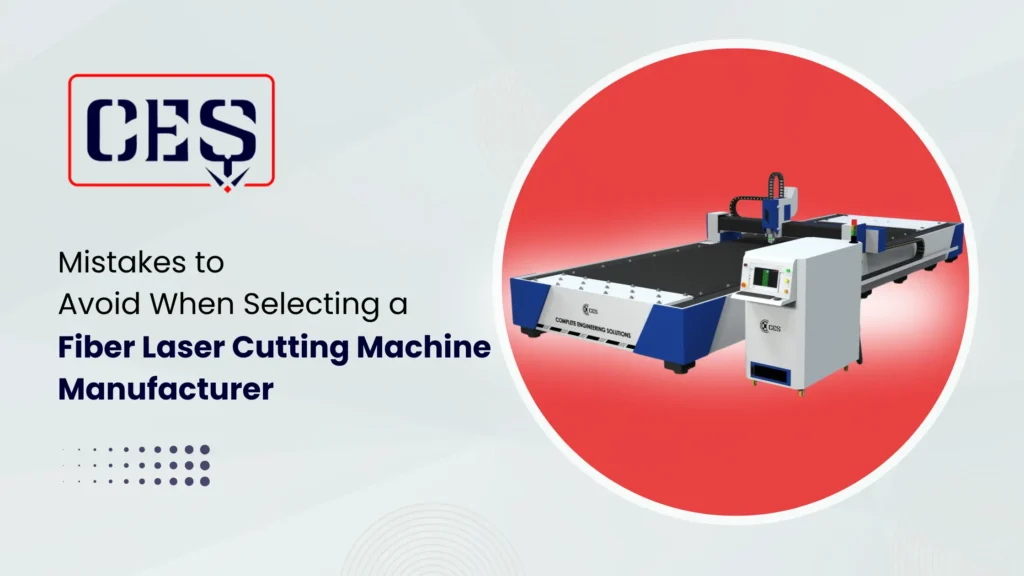
Mistakes to Avoid When Selecting a Fiber Laser Cutting Machine Manufacturer
Buying a fiber laser cutting machine sounds simple enough, but choosing the right manufacturer is where most buyers end up confused. Many people compare a few options, check the price, and make a quick decision. At that moment, everything looks fine. The real problems start later. The machine may not perform as expected, service support may be slow, or production may stop due to small issues. These situations are more common than you’d think, and they often happen because important factors were ignored during selection. If you are planning to invest in a fiber laser cutting machine manufacturer, knowing these common mistakes can save you time, money, and a lot of unnecessary stress. Why Choosing the Right Fiber Laser Cutting Machine Manufacturer Matters The manufacturer you choose plays a major role in how your machine holds up over time. A well-built machine with proper support can deliver consistent cutting quality and smooth day-to-day operations. On the other hand, a poor choice can lead to frequent breakdowns and delays that eat into your production schedule. For example, even a small issue in the machine can stop production for hours if service support is slow. This not only delays delivery but also affects customer trust and overall profitability. Mistake 1: Choosing Based Only on Price Many buyers select a machine based only on the lowest price. While this may seem like a smart move upfront, it often increases long-term costs in ways that are hard to predict. Low-cost machines may need frequent maintenance, offer lower cutting accuracy, and may not hold up well under continuous use. A better approach is to look at the total cost, which includes maintenance, spare parts, and the overall life of the machine. Focusing only on price often leads to higher expenses down the road. Mistake 2: Ignoring After-Sales Service and Support After-sales support is one of the most important factors, yet it is often the first thing buyers overlook. A fiber laser cutting machine requires proper installation, operator training, and regular service to keep running at its best. If the manufacturer does not provide timely support, even a minor technical issue can bring your operations to a halt. Many businesses have faced delays simply because they could not get quick service assistance when they needed it most. Weak service support can disrupt your entire production flow. Mistake 3: Selecting the Wrong Machine Specifications Choosing the wrong specifications is surprisingly common. Buyers often select a machine without fully understanding what their application actually demands. Important factors to consider include: Type of material (mild steel, stainless steel, aluminum) Thickness of the material Required cutting speed and accuracy Machine power (kW) For example, running a low-power machine on thick materials can result in slow cutting and poor edge quality, which directly affects your output. Wrong specifications affect cutting quality and efficiency more than most people realize. Mistake 4: Not Checking Manufacturer Experience and Credibility Not all manufacturers offer the same level of quality or expertise. An experienced fiber laser cutting machine manufacturer understands real industry requirements and builds more reliable machines because of it. Looking into a manufacturer’s past installations, client base, and industry presence gives you a much clearer picture of what they are capable of. Experienced manufacturers are also far better at handling unexpected technical issues. Lack of experience can increase operational risks over the long run. Mistake 5: Skipping Machine Demo or Sample Testing Some buyers finalize their purchase without ever seeing the machine run. This is a risk that often comes back to bite them after installation. A demo or sample test lets you evaluate the following: Cutting quality Speed and consistency Machine stability Without testing, you may end up with a machine that simply does not match what you expected. Skipping testing can result in a machine that doesn’t meet your production needs. Hidden Costs You Should Know Before Buying The price you see at the start is only one part of the total investment. Many buyers ignore ongoing costs, which later put pressure on their budget and profitability. Here are some common hidden costs worth knowing about: Maintenance and servicing: Regular servicing is necessary to keep the machine running smoothly, and over time, it adds up. Consumables: Parts like nozzles, lenses, and protective glass need to be replaced regularly, especially in continuous production environments. Power consumption: Fiber laser machines use a significant amount of electricity depending on power capacity and how heavily they are used. Downtime cost: Every time the machine stops due to a fault or a delayed service visit, it hits your production and delivery timelines directly. Spare parts availability: If parts are not easily available nearby, repair time stretches out, and that means additional losses. Understanding these costs beforehand helps you make a more practical and financially sound decision, rather than getting caught off guard later. How to Compare Fiber Laser Cutting Machine Manufacturers Instead of selecting randomly, compare manufacturers based on practical factors: Comparison Factor What to Check Why It Matters Price vs Value Initial cost + long-term expenses Helps avoid high hidden costs After-Sales Support Service response time, support availability Reduces downtime and production delays Machine Specifications Power, cutting capacity, material compatibility Ensures the machine fits your requirement Experience Years in industry, installed machines Improves reliability and problem handling Spare Parts Availability Local availability and delivery time Faster repairs and less downtime Training Support Operator training and guidance Smooth machine operation Which Fiber Laser Cutting Machine is Right for Your Application Choosing the right machine really comes down to what kind of work you handle on a daily basis. A wrong selection can slow down your cutting speed, increase power usage, and hurt your output quality. Here is a simple breakdown to help you match the machine with your actual needs: Thin Sheet Cutting (0.5 mm to 3 mm) Best suited for lower power machines like 1kW to 1.5kW → Faster cutting speed, lower power consumption → Ideal for light fabrication work. Medium Thickness (3 mm to
Mistakes to Avoid When Selecting a Fiber Laser Cutting Machine Manufacturer Read More »