Khushboo SEO

What Gas Should You Use for Fiber Laser Cutting

Fiber Laser Cutting Gas Guide: Nitrogen, Oxygen & Air

If you’re running a fiber laser machine and struggling with rough edges, discoloration, or slow cut speeds, there’s a good chance your assist gas choice is the problem, not your machine settings. The type of gas you use for fiber laser cutting directly affects cut quality, edge finish, material compatibility, and your overall operating cost. Whether you’re cutting mild steel, stainless steel, aluminum, or brass, using the wrong gas can ruin an otherwise perfect setup. In this guide, we break down the three main assist gases, nitrogen, oxygen, and compressed air, so you can make the right call for your specific application. Why Assist Gas Matters in Fiber Laser Cutting Before we compare gases, let’s understand what assist gas actually does during the laser cutting process. When a fiber laser beam hits the material, assist gas is blown through the cutting nozzle at high pressure. It serves three key purposes: •       Ejects molten material from the kerf (cut channel) •       Cools the cut zone and surrounding area •       Controls or prevents oxidation on the cut edge The right assist gas keeps the cut clean, fast, and burr-free. The wrong one creates dross buildup, discolored edges, or significantly increases your per-hour operating cost. The 3 Main Gases Used in Fiber Laser Cutting Here is a quick comparison before we dive into each gas in detail: Gas Best For Materials Cut Edge Quality Relative Cost Nitrogen (N2) Stainless steel, aluminum, brass, copper Oxide-free, bright silver High Oxygen (O2) Mild steel / carbon steel Slight oxide layer, darker edge Low–Medium Compressed Air Thin non-ferrous metals, mild steel Acceptable (slight burr possible) Very Low Nitrogen (N2): The Clean-Cut Champion Nitrogen is the most widely used assist gas for fiber laser cutting, especially when cut edge quality is a top priority. Because nitrogen is inert, it does not react with the metal during cutting. This means there is no oxidation on the cut edge – you get a clean, bright, silver finish that is ready for welding or coating without any post-processing. Best For: •       Stainless steel (all thicknesses) •       Aluminum •       Brass and copper •       Any application requiring a clean, weld-ready edge Key Advantages: •       Zero oxidation – bright, clean edge finish •       No secondary cleaning or grinding required •       Ideal for medical, food-grade, and decorative applications Disadvantages: •       Higher cost compared to oxygen or air •       Requires higher pressure (10–20 bar) which increases gas consumption •       Slower cutting speeds on thick mild steel Typical nitrogen cutting pressure ranges from 10 to 20 bar depending on material thickness. Thicker materials require more pressure to fully eject the melt from the kerf. Oxygen (O2): Speed and Power for Mild Steel Oxygen is the go-to assist gas when you are cutting mild steel or carbon steel at high volume. Unlike nitrogen, oxygen actively reacts with the metal – this exothermic reaction adds energy to the cut, allowing faster cutting speeds and better penetration on thick material. Best For: •       Mild steel and carbon steel (especially thicker sections) •       Applications where cut speed matters more than edge color •       Structural and industrial fabrication Key Advantages: •       Faster cutting speeds on thick mild steel •       Lower gas pressure required (0.5–3 bar) •       Lower cost per hour versus nitrogen Disadvantages: •       Creates an oxide layer on the cut edge (darker, brownish color) •       Not suitable for stainless steel, aluminum, or non-ferrous metals •       Parts may need grinding or blasting before painting or welding One important note: never use oxygen on stainless steel or aluminum. It creates heavy oxidation and a rough, discolored edge that is very difficult to remove. Save oxygen strictly for mild steel applications. Compressed Air: The Budget-Friendly Option Compressed air is the most cost-effective assist gas option. It is approximately 78% nitrogen and 21% oxygen, which means it provides partial inert protection while also allowing some oxidation reaction. Compressed air works well for thin materials and for operations where operating cost is the primary concern. Many shops use it for cutting aluminum sheet under 3mm, mild steel under 2mm, or for parts that will be powder-coated anyway (where edge color does not matter). Best For: •       Thin aluminum and non-ferrous sheet metal (under 3mm) •       Thin mild steel where cost matters most •       Parts that will be painted or powder-coated after cutting •       Prototype or low-volume work where gas cost needs to stay low Key Advantages: •       Extremely low operating cost – just the compressor running cost •       No gas cylinders or bulk tank required •       Good enough quality for many general fabrication jobs Disadvantages: •       Lower cut quality than pure nitrogen or oxygen •       Can produce slight burring on the cut edge •       Moisture and oil in compressed air can damage the lens if filtration is not adequate •       Not suitable for thick materials or precision applications If you decide to use compressed air, invest in a high-quality air dryer and filtration system. Moisture and oil contamination from a poorly maintained compressor can damage your laser optics, leading to expensive repairs. How to Choose the Right Gas for Your Job Use this simple decision framework: 1.    Cutting stainless steel? : Always use Nitrogen 2.    Cutting aluminum or brass? : Use Nitrogen for best results, Compressed Air for thin gauge on a budget 3.    Cutting mild steel thicker than 4mm at high volume? : Use Oxygen for speed 4.    Cutting thin mild

Fiber Laser Cutting Gas Guide: Nitrogen, Oxygen & Air Read More »

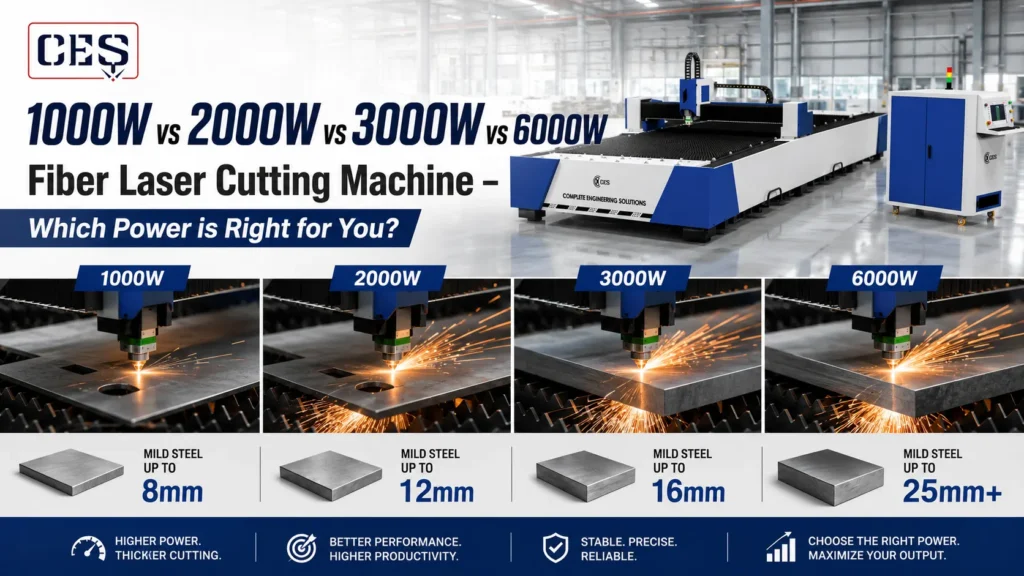
1000W vs 2000W vs 3000W vs 6000W Fiber Laser Cutting Machine: Which Power is Right for You

1000W vs 2000W vs 3000W vs 6000W Fiber Laser Cutting Machine: Which Power is Right for You?

1000W suits thin metals (up to 6 mm) for small workshops and decorative work. 2000W handles medium fabrication up to 12 mm – the most versatile choice for most businesses. 3000W is ideal for heavy fabrication requiring speeds on thick steel up to 20 mm. 6000W is for high-volume industrial operations cutting plates up to 30 mm+. Match power to your thickest material and your required production speed – not the highest number available. When you are buying a fiber laser cutting machine, power selection is the most consequential decision you will make. Choose too low and your machine cannot cut the materials your business needs. Choose too high and you overpay on capital cost, electricity, and maintenance for capability you will never use. This guide breaks down the real differences between 1000W, 2000W, 3000W, and 6000W fiber laser cutting machines – with exact material thicknesses, cutting speeds, operating costs, and industry recommendations – so you can invest in exactly the right machine.  Why Does Laser Power Level Matter? Laser power – measured in watts (W) – directly determines two things: the maximum material thickness the machine can cut cleanly, and the speed at which it cuts a given thickness. Higher power delivers more energy to the cut zone, which means it can penetrate thicker material and complete cuts faster. But power is not the only variable. Cutting speed, assist gas type (nitrogen, oxygen, or compressed air), material reflectivity, and beam quality all interact with power output. A well-configured 2000W machine from a quality manufacturer can outperform a poorly configured 3000W machine on certain applications. This is why understanding the full picture matters before you buy. Rule of thumb: Select power based on your thickest material in regular production – not your occasional heaviest job. For edge cases, factor in a 20–30% power buffer. What Each Power Level Can Do: A Practical Overview 1000W Fiber Laser Cutting Machine A 1000W machine is the entry point for industrial fiber laser cutting. It cuts thin sheet metals cleanly and cost-efficiently. It is best suited for businesses that primarily work with materials under 6 mm – signage fabricators, decorative metalwork producers, and small precision workshops. At 1000W, operating costs (electricity, consumables) are the lowest of all power tiers, making it financially accessible for startups and small manufacturers. It struggles with copper and brass at any meaningful thickness due to their high reflectivity, and it is not recommended for mild steel above 10 mm because cutting speeds become economically unviable. 2000W Fiber Laser Cutting Machine The 2000W machine is the most popular power level globally – and for good reason. It offers the best balance of cutting capability, speed, energy consumption, and purchase price. It handles the full range of materials needed by most mid-sized manufacturers: stainless steel up to 8 mm, mild steel up to 16 mm, and aluminium up to 6 mm – all at commercially viable cutting speeds. For businesses in automotive components, kitchen equipment, fitness equipment, or general sheet metal fabrication, a 2000W machine covers 80–90% of production requirements at a lower investment than 3000W+ models. 3000W Fiber Laser Cutting Machine At 3000W, the machine moves into heavy fabrication territory. Cutting speeds on medium-thickness steel increase significantly compared to 2000W – often 30-50% faster on 6-10 mm mild steel 0 which directly translates to higher throughput and lower cost per part in volume production. Maximum cutting thickness extends to 20 mm mild steel and 12 mm stainless steel. 3000W is the preferred choice for structural steel fabricators, elevator component manufacturers, and large OEMs who run multi-shift operations and need consistent high-speed performance across varied material thicknesses. 6000W Fiber Laser Cutting Machine A 6000W machine is an industrial-grade workhorse designed for maximum throughput on thick materials. It can cut mild steel plates up to 30 mm or more, stainless steel up to 20 mm, and aluminium up to 18 mm – at speeds that make high-volume production economically viable. It is the standard choice for heavy engineering, pressure vessel fabrication, shipbuilding, and defence manufacturing. The tradeoff is significant: higher machine cost, higher electricity consumption (40-50 kW), and higher maintenance costs. For businesses that do not regularly cut material above 16 mm, the economics rarely justify 6000W over 3000W. 1000W vs 2000W vs 3000W vs 6000W: Full Comparison Table All thickness figures are approximate maximum values for clean cuts using appropriate assist gas. Actual performance depends on machine configuration, beam quality, and material grade. Parameter 1000W 2000W 3000W 6000W Mild/Carbon Steel – Max Thickness Up to 10 mm Up to 16 mm Up to 20 mm Up to 30 mm+ Stainless Steel – Max Thickness Up to 5 mm Up to 8 mm Up to 12 mm Up to 20 mm Aluminum – Max Thickness Up to 3 mm Up to 6 mm Up to 10 mm Up to 18 mm Copper / Brass – Max Thickness Up to 2 mm Up to 3 mm Up to 5 mm Up to 8 mm Cutting Speed (3 mm SS) Moderate Fast Very Fast Extremely Fast Cutting Speed (10 mm MS) Not Recommended Moderate Fast Very Fast Assist Gas N₂ / O₂ / Air N₂ / O₂ / Air N₂ / O₂ / Air N₂ / O₂ / Air Electricity Consumption Low (~8–10 kW) Medium (~15–18 kW) Medium-High (~20–25 kW) High (~40–50 kW) Machine Cost (Relative) Lowest Moderate High Highest Operating Cost per Hour Lowest Low–Medium Medium High Ideal Material Thickness Range 0.5 mm – 6 mm 0.5 mm – 12 mm 1 mm – 16 mm 2 mm – 25 mm+ Best For Signs, décor, thin sheet Auto parts, kitchenware Heavy fab, structural Industrial, high-volume Business Type Small workshops, startups Medium manufacturers Large fabricators Heavy industry, OEMs Which Power Level is Right for Your Industry? Use this table to match your specific industry or application to the recommended power range. Industry / Application Recommended Power Reason Signage & Advertising 1000W – 2000W Mainly thin sheets, aluminium composites, acrylic-bonded metals Kitchen Equipment /

1000W vs 2000W vs 3000W vs 6000W Fiber Laser Cutting Machine: Which Power is Right for You? Read More »

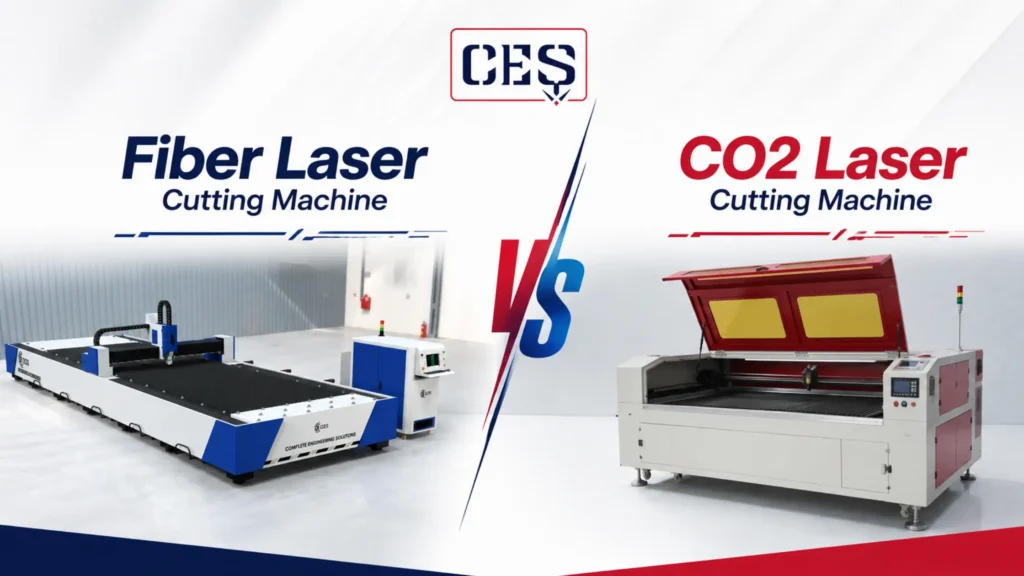
Fiber Laser vs CO2 Laser Cutting Machine: Which One to Buy in 2026?

Fiber Laser Cutting Machine vs CO2 Laser Cutting Machine: Which One Should You Buy in 2026?

If you are planning to invest in a laser cutting machine in 2026, one question will stop you before anything else: fiber laser or CO2 laser – which is better?   Both technologies have been around for decades. But the gap between them has grown significantly in the last few years, and in 2026, the answer is no longer as complicated as it used to be. This guide breaks down everything: speed, running cost, material compatibility, ROI, payback period, and which machine makes more sense for your specific business. Whether you run a small fabrication shop or a mid-scale manufacturing unit, this comparison will help you make the right call. What Is a Fiber Laser Cutting Machine? A fiber laser cutting machine uses a solid-state laser source where the beam is generated through optical fibres doped with rare-earth elements like ytterbium. The beam is delivered directly to the cutting head without the need for mirrors or gas-filled tubes. Fiber lasers operate at a wavelength of 1.06 microns, which is highly absorbed by metals. This makes fiber laser the dominant technology for cutting mild steel, stainless steel, aluminium, brass, copper, and other reflective metals. What Is a CO2 Laser Cutting Machine? A CO2 laser uses a gas mixture – typically carbon dioxide, nitrogen, and helium – excited by electrical discharge to produce the laser beam. CO2 lasers operate at a wavelength of 10.6 microns. This longer wavelength is well absorbed by organic and non-metallic materials. CO2 lasers have traditionally been used for cutting acrylic, wood, MDF, leather, fabric, rubber, and thin non-metals. They can cut metals too, but are significantly less efficient compared to fiber lasers on thicker or reflective materials. Fiber Laser vs CO2 Laser: Head-to-Head Comparison Parameter Fiber Laser CO2 Laser Cutting Speed (thin metal) 3–5x faster Slower Best Material All metals Non-metals + thin metals Wavelength 1.06 microns 10.6 microns Running Cost Low High Maintenance Minimal High (mirrors, gas tubes) Power Consumption 30–40% less Higher Cutting Thickness (metal) Up to 50mm+ Limited on thick metal Reflective Metal Cutting Excellent Risk of back-reflection Machine Lifespan 100,000+ hours 20,000–30,000 hours (tube) Price in India (entry level) Rs.25–35 lakh Rs.8–18 lakh Fiber Laser vs CO2: Cutting Thickness Comparison One of the most common questions buyers ask: which machine cuts thicker material better? Here is a direct comparison on the three most common thicknesses – 3mm, 6mm, and 12mm: 3mm Mild Steel Fiber laser cuts at approximately 10–14 metres per minute. CO2 laser cuts at 3-5 metres per minute. Winner: Fiber laser – 3x faster, cleaner edge 6mm Mild Steel Fiber laser handles 6mm effortlessly with nitrogen or oxygen assist. CO2 laser struggles beyond 6mm, edge quality drops. Winner: Fiber laser – better edge finish, faster cycle time 12mm Mild Steel Fiber laser (2kW–3kW) cuts 12mm cleanly with oxygen assist. CO2 laser (3kW+) can cut 12mm but speed is significantly lower and edge quality is poor. Winner: Fiber laser – no contest at this thickness For non-metals like 3mm acrylic or 6mm MDF, CO2 still produces a cleaner, polished edge compared to fiber. This is the one area where CO2 retains an advantage.  Fiber Laser Running Cost vs CO2 Laser: The Real Numbers This is where fiber laser pulls far ahead for production environments. Fiber Laser Running Cost (per hour) CO2 Laser Running Cost (per hour) Over a 2-shift operation, fiber laser can save Rs.8-15 lakh per year in operating costs alone. This directly impacts your payback period. Fiber Laser Cutting Machine ROI and Payback Period A 1kW-2kW fiber laser cutting machine in India is priced between Rs.25 lakh and Rs.45 lakh depending on the brand and configuration. A 3kW-6kW machine ranges from Rs.55 lakh to Rs.1.2 crore. Typical payback period calculation for a 2kW fiber laser: CO2 lasers have a lower upfront cost but the higher running cost and lower productivity on metal stretch the payback period to 24-36 months for metal cutting applications. CO2 Laser for Acrylic, Wood & Non-Metals: Where It Still Wins Let us be honest – CO2 laser is not dead. For specific applications, it remains the better choice in 2026. Choose CO2 Laser if your primary work involves: For these materials, fiber laser either cannot cut cleanly or requires special settings that increase operating complexity. If your business is primarily non-metal – signage, woodworking, laser engraving on organic materials – CO2 is still the right call. Fiber Laser Cutting Machine Benefits and Disadvantages Fiber laser cutting machines offer several advantages and limitations that directly impact productivity, operating costs, material compatibility, and overall manufacturing efficiency.  Benefits Disadvantages Fiber Laser Cutting Machine Price in India 2026 Power Configuration Price Range (INR) 1000W Single pallet, 3015 bed Rs.22–28 lakh 1500W Single pallet, 3015 bed Rs.28–36 lakh 2000W Single pallet, 3015 bed Rs.35–50 lakh 3000W Exchange table, 3015 Rs.60–80 lakh 6000W Exchange table, 3015 Rs.90 lakh–1.2 crore Which Laser Cutter Should Small Businesses Buy in 2026? If you run a small or medium fabrication business, here is a straightforward guide: Buy a Fiber Laser if: Buy a CO2 Laser if: Buy Both if: Best Fiber Laser Cutting Machine Brands in India 2026 When buying a fiber laser in India, after-sales service and local support matter as much as the machine specs. Some of the established names in the Indian market include CES Laser Machines, Bystronic, Trumpf, Han’s Laser, and Bodor. CES Laser Machines, based in Ahmedabad, is one of the trusted Indian manufacturers offering fiber laser cutting machines with local service support, genuine spare parts, and installation training, making them a strong choice for Indian SMEs who need reliable post-purchase support. Final Verdict:  In 2026, fiber laser cutting machine is the clear winner for any metal-focused manufacturing business. The speed advantage, lower running cost, minimal maintenance, and superior ROI make it the obvious long-term investment. CO2 laser holds its ground only for non-metal cutting, acrylic, wood, leather, and similar materials. For mixed operations, a CO2 laser as a secondary machine makes sense. The upfront cost of fiber laser has come

Fiber Laser Cutting Machine vs CO2 Laser Cutting Machine: Which One Should You Buy in 2026? Read More »

How Automatic Laser Welding Machine ROI for Automotive Industry

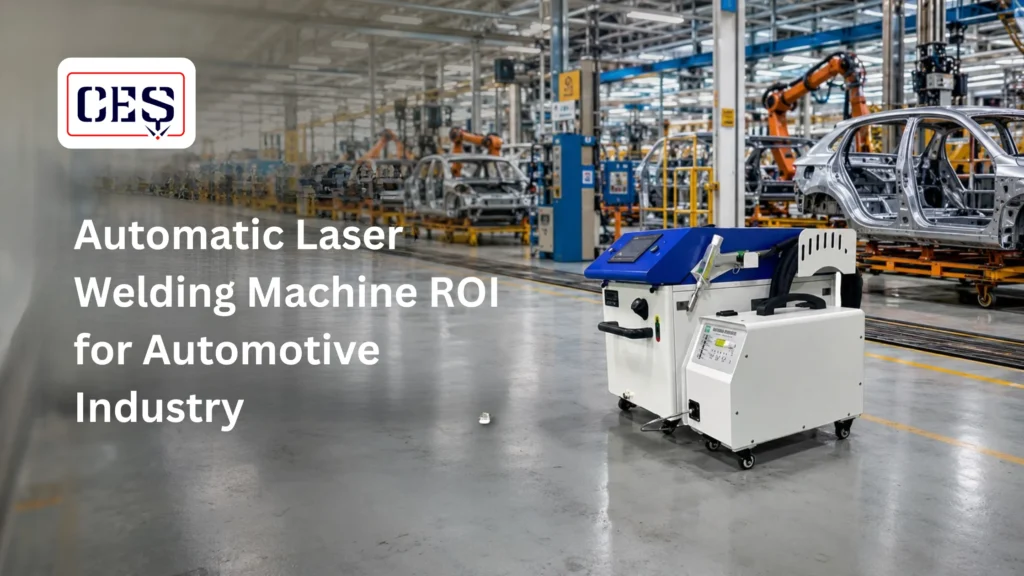
Automatic Laser Welding Machine ROI for the Automotive Industry

Automotive manufacturing runs on tight margins and tighter schedules. Whether you’re producing body panels, exhaust components, battery enclosures, or structural assemblies, your welding process sits right at the center of your production efficiency. Many manufacturers still rely on MIG or TIG welding for high-volume applications. These methods work, but they come with real limitations: slower cycle times, operator variability, higher heat input, and significant post-weld finishing costs. That’s exactly where an automatic laser welding machine starts to make a strong financial case. This blog breaks down the actual ROI of laser welding for automotive manufacturers,  what drives cost savings, what the investment looks like, and how to evaluate whether the switch makes sense for your facility. Why ROI Matters Before the Purchase Decision In B2B manufacturing, every capital equipment decision comes down to numbers. It’s not just about what the machine can do, it’s about what it does for your bottom line. When evaluating a laser welding machine for automotive production, ROI should be calculated across multiple factors: Let’s look at each of these closely. How Automatic Laser Welding Reduces Cost Per Part 1. Faster Cycle Times Mean Higher Throughput Laser beam welding operates at significantly higher speeds compared to conventional arc welding processes. For thin-gauge automotive steel or aluminum, commonly used in body-in-white and EV battery tray assemblies, laser welding can complete passes in a fraction of the time. In high-volume automotive environments, even a 20-30% reduction in weld cycle time per component can translate into hundreds of additional parts per shift. More parts per shift = lower cost per unit = better margin per vehicle. 2. Minimal Heat Input Reduces Distortion and Rework One of the biggest hidden costs in traditional welding is post-weld correction. Heat distortion on thin metal panels often requires grinding, straightening, or rework, all of which add labor hours and slow down delivery. Laser welding uses a highly focused beam with low heat input. This produces a narrow weld zone, which means significantly less thermal distortion on finished parts. For automotive manufacturers, this directly reduces: These aren’t minor savings in high-volume production. They add up quickly. 3. Consistent Weld Quality Without Operator Variability Manual welding quality depends heavily on the skill and condition of the operator. Fatigue, skill gaps, or setup inconsistencies all affect weld quality, and in automotive applications, weld failures have serious consequences. An automatic laser welding machine follows programmed parameters every single cycle. The weld depth, speed, focus, and position remain consistent across the entire run. This consistency means: For suppliers working under automotive OEM quality standards, this level of process control is not optional; it’s expected. Where Laser Welding Adds the Most Value in Automotive Production Not every application is equal. The ROI of a laser welding system depends on where in your production it’s deployed. Here are the application areas where automotive manufacturers typically see the strongest returns: Application Area Why Laser Welding Works Well Body-in-White (BIW) Panels High-speed welding on thin steel/aluminum with low distortion EV Battery Enclosures Precise, hermetic seals required for safety compliance Exhaust Components Consistent weld quality on stainless steel tubing Transmission and Gear Components Tight tolerances with minimal post-processing Seating Frames and Structural Brackets High-volume repeatability on structural welds If your current production involves any of these, a detailed ROI analysis is worth running. Understanding the Investment Side of the Equation ROI is a two-sided calculation. The savings matter, but so does the total investment required. A typical automatic laser welding machine for automotive applications involves: The key question is not “How much does it cost?” It’s “How many months does it take to recover that cost?” For high-volume automotive production environments, manufacturers typically evaluate payback periods in the range of 18 to 36 months, depending on volume, part complexity, and existing rework costs. In some high-output scenarios, especially for EV battery or BIW applications, payback can be faster when rework reduction is factored in properly. Work with your equipment supplier to model this based on your actual production data, not industry averages. Key Factors That Affect Your ROI Timeline Every facility is different. These are the variables that most directly affect how quickly you recover your investment: Production Volume Higher volume shortens payback. Laser welding’s efficiency advantage compounds over thousands of parts per month. Current Rework Rate If your current process has a high rework or scrap rate, laser welding’s consistency will generate savings faster. Labor Costs In facilities with higher-skilled labor costs, reducing manual welding dependency has a direct and measurable impact on operating costs. Part Complexity Complex geometries that are hard to weld consistently with manual processes often show the fastest ROI improvement with automated laser welding. Material Type Aluminum and advanced high-strength steels,  increasingly common in EV and lightweight vehicle platforms,  are better suited to laser welding than conventional processes, which reduces quality-related losses. Ready to Assess Your Laser Welding ROI? If you’re evaluating an automatic laser welding machine for your automotive production line, CES Laser Machine can help you build a realistic ROI model based on your actual application. Click here What to Evaluate When Choosing an Automatic Laser Welding Machine Before committing to a purchase, evaluate these aspects carefully: Don’t evaluate machines in isolation. Evaluate the full production workflow impact. Common Mistakes Manufacturers Make With Laser Welding ROI Calculations A few miscalculations can lead to either overestimating or underestimating the ROI: Underestimating rework savings Many manufacturers only count the machine cost against cycle time savings. Rework, scrap, and finishing labor are often the bigger line items, and they’re frequently undertracked. Ignoring integration costs The machine price is not the full investment. Fixtures, programming, robot integration, and facility adjustments need to be included in your total cost of ownership. Not accounting for quality-driven revenue OEM qualification requirements increasingly favor suppliers with documented process control. Laser welding supports this, and that can open doors to higher-value contracts. Comparing only against manual welding If you’re replacing a semi-automatic process, the gap may be smaller than expected. Compare against your actual

Automatic Laser Welding Machine ROI for the Automotive Industry Read More »

5 Costly Mistakes to Avoid When Selecting a Fiber Laser Cutting Machine Manufacturer

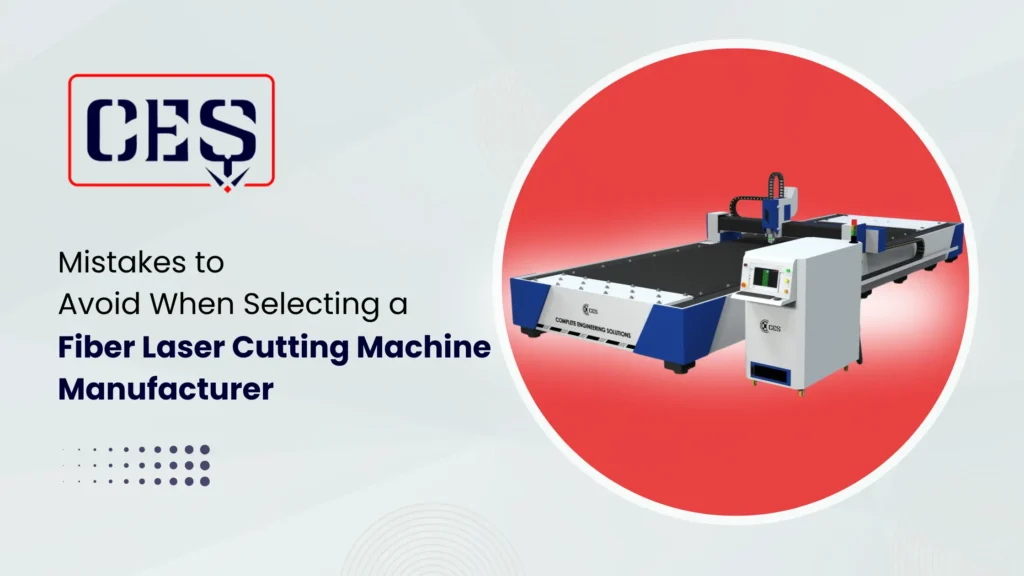
Mistakes to Avoid When Selecting a Fiber Laser Cutting Machine Manufacturer

Buying a fiber laser cutting machine sounds simple enough, but choosing the right manufacturer is where most buyers end up confused. Many people compare a few options, check the price, and make a quick decision. At that moment, everything looks fine. The real problems start later. The machine may not perform as expected, service support may be slow, or production may stop due to small issues. These situations are more common than you’d think, and they often happen because important factors were ignored during selection. If you are planning to invest in a fiber laser cutting machine manufacturer, knowing these common mistakes can save you time, money, and a lot of unnecessary stress. Why Choosing the Right Fiber Laser Cutting Machine Manufacturer Matters The manufacturer you choose plays a major role in how your machine holds up over time. A well-built machine with proper support can deliver consistent cutting quality and smooth day-to-day operations. On the other hand, a poor choice can lead to frequent breakdowns and delays that eat into your production schedule. For example, even a small issue in the machine can stop production for hours if service support is slow. This not only delays delivery but also affects customer trust and overall profitability. Mistake 1: Choosing Based Only on Price Many buyers select a machine based only on the lowest price. While this may seem like a smart move upfront, it often increases long-term costs in ways that are hard to predict. Low-cost machines may need frequent maintenance, offer lower cutting accuracy, and may not hold up well under continuous use. A better approach is to look at the total cost, which includes maintenance, spare parts, and the overall life of the machine. Focusing only on price often leads to higher expenses down the road. Mistake 2: Ignoring After-Sales Service and Support After-sales support is one of the most important factors, yet it is often the first thing buyers overlook. A fiber laser cutting machine requires proper installation, operator training, and regular service to keep running at its best. If the manufacturer does not provide timely support, even a minor technical issue can bring your operations to a halt. Many businesses have faced delays simply because they could not get quick service assistance when they needed it most. Weak service support can disrupt your entire production flow. Mistake 3: Selecting the Wrong Machine Specifications Choosing the wrong specifications is surprisingly common. Buyers often select a machine without fully understanding what their application actually demands. Important factors to consider include: Type of material (mild steel, stainless steel, aluminum) Thickness of the material Required cutting speed and accuracy Machine power (kW) For example, running a low-power machine on thick materials can result in slow cutting and poor edge quality, which directly affects your output. Wrong specifications affect cutting quality and efficiency more than most people realize. Mistake 4: Not Checking Manufacturer Experience and Credibility Not all manufacturers offer the same level of quality or expertise. An experienced fiber laser cutting machine manufacturer understands real industry requirements and builds more reliable machines because of it. Looking into a manufacturer’s past installations, client base, and industry presence gives you a much clearer picture of what they are capable of. Experienced manufacturers are also far better at handling unexpected technical issues. Lack of experience can increase operational risks over the long run. Mistake 5: Skipping Machine Demo or Sample Testing Some buyers finalize their purchase without ever seeing the machine run. This is a risk that often comes back to bite them after installation. A demo or sample test lets you evaluate the following: Cutting quality Speed and consistency Machine stability Without testing, you may end up with a machine that simply does not match what you expected. Skipping testing can result in a machine that doesn’t meet your production needs. Hidden Costs You Should Know Before Buying The price you see at the start is only one part of the total investment. Many buyers ignore ongoing costs, which later put pressure on their budget and profitability. Here are some common hidden costs worth knowing about: Maintenance and servicing: Regular servicing is necessary to keep the machine running smoothly, and over time, it adds up. Consumables: Parts like nozzles, lenses, and protective glass need to be replaced regularly, especially in continuous production environments. Power consumption: Fiber laser machines use a significant amount of electricity depending on power capacity and how heavily they are used. Downtime cost: Every time the machine stops due to a fault or a delayed service visit, it hits your production and delivery timelines directly. Spare parts availability: If parts are not easily available nearby, repair time stretches out, and that means additional losses. Understanding these costs beforehand helps you make a more practical and financially sound decision, rather than getting caught off guard later. How to Compare Fiber Laser Cutting Machine Manufacturers Instead of selecting randomly, compare manufacturers based on practical factors: Comparison Factor What to Check Why It Matters Price vs Value Initial cost + long-term expenses Helps avoid high hidden costs After-Sales Support Service response time, support availability Reduces downtime and production delays Machine Specifications Power, cutting capacity, material compatibility Ensures the machine fits your requirement Experience Years in industry, installed machines Improves reliability and problem handling Spare Parts Availability Local availability and delivery time Faster repairs and less downtime Training Support Operator training and guidance Smooth machine operation Which Fiber Laser Cutting Machine is Right for Your Application Choosing the right machine really comes down to what kind of work you handle on a daily basis. A wrong selection can slow down your cutting speed, increase power usage, and hurt your output quality. Here is a simple breakdown to help you match the machine with your actual needs: Thin Sheet Cutting (0.5 mm to 3 mm) Best suited for lower power machines like 1kW to 1.5kW → Faster cutting speed, lower power consumption → Ideal for light fabrication work. Medium Thickness (3 mm to

Mistakes to Avoid When Selecting a Fiber Laser Cutting Machine Manufacturer Read More »

What to Look for Before Buying an Industrial Laser Cleaning Machine

What to Look for Before Buying an Industrial Laser Cleaning Machine

If you have been exploring smarter ways to handle industrial cleaning, chances are you’ve already come across the Laser Cleaning Machine. And for good reason it’s changing the way industries approach surface cleaning with unmatched precision, zero chemicals, and impressive cost savings over time. Whether you’re dealing with rust, old coatings, or stubborn contaminants, it stands out as a far superior alternative to conventional methods like sandblasting or chemical stripping. That said, not every machine is built the same. Whether you’re looking for an industrial laser cleaner for a high-volume manufacturing setup or a laser rust removal machine for routine maintenance work, making the right choice from the start can save you a great deal of trouble – and money – down the line. Understanding Laser Cleaning Technology At its core, a Laser Cleaning Machine works by directing a focused laser beam onto a surface to vaporize or dislodge contaminants – all without ever physically touching the material underneath. This non-contact approach gives it a level of precision that traditional cleaning methods simply can’t match, while also producing minimal waste throughout the process. Key characteristics of this technology include: Non-abrasive cleaning process No chemical usage High precision and control Key Factors to Consider Before Buying Selecting the right laser surface cleaning equipment isn’t a decision you want to rush. There are several technical and operational aspects worth looking into carefully – each one has a direct impact on how well the machine performs, how long it lasts, and whether it truly fits your day-to-day operations. Here are the essential factors you should evaluate before purchase: Power and performance Machine type and design Cost and maintenance 1. Laser Power and Performance Power is one of the first things worth getting right. The wattage of a Laser Cleaning Machine directly determines how effectively it can tackle rust, paint, or stubborn coatings. Higher power means faster results on tough surfaces, while lower power gives you more control for sensitive or delicate applications. Here’s how different power levels impact performance: Low power (20W–100W): Light cleaning Medium power (100W–500W): Industrial use High power (500W+): Heavy-duty applications 2. Type of Laser Source The laser source you choose has a big say in how efficient, reliable, and easy to maintain your machine will be over time. Among the available options, a fiber laser cleaning system tends to be the go-to choice for industrial users – and for good reason. It offers a long operational life and consistent performance even under demanding conditions. Different laser types offer distinct advantages: Pulsed lasers – Better control for delicate surfaces Continuous wave lasers – Faster cleaning for tough materials 3. Material Compatibility Not all surfaces respond the same way to laser cleaning, so compatibility really does matter. A well-designed laser paint removal machine should be able to work across a variety of materials without causing unintended damage to the surface beneath. Ensure your machine supports these materials: Metals like steel and aluminum Painted or coated surfaces Rusted and oxidized components 4. Portability and Design How and where you plan to use the machine will largely determine what design makes the most sense for you. A laser rust removal machine that needs to be moved between job sites calls for something compact and easy to carry, while a fixed installation works better when you need continuous output on a production floor. Consider these design options based on your needs: Handheld machines for mobility Fixed systems for production lines 5. Cooling System Long cleaning sessions put heat stress on any machine, which is why the cooling system deserves more attention than it often gets. Most quality industrial laser cleaner units are built with cooling mechanisms that keep performance stable and prevent overheating during extended use. Common cooling options include: Air-cooled systems for light usage Water-cooled systems for heavy-duty tasks 6. Safety Features Working with laser equipment in an industrial setting comes with real safety responsibilities. A well-equipped Laser Cleaning Machine should have built-in protections that keep operators safe without making the machine harder to use. Important safety features to look for include: Emergency stop buttons Protective enclosures Laser shielding systems 7. Maintenance and Lifespan One of the biggest practical advantages of a good fiber laser cleaning system is how little upkeep it actually needs. Less downtime means more consistent output – and that adds up to real value over the life of the machine. These factors contribute to durability and efficiency: Long lifespan (up to 100,000 hours) Low maintenance requirements Easy availability of spare parts 8. Cost and ROI Yes, the upfront price of a laser paint removal machine or a quality industrial laser cleaner can feel steep at first glance. But when you factor in what you stop spending – on chemicals, abrasive materials, and extra labor – the picture changes pretty quickly. Over time, the savings tend to speak for themselves. These key advantages contribute directly to higher return on investment (ROI): No consumables Lower maintenance costs Eco-friendly operation Benefits of Laser Cleaning Machines ​ There’s a reason more industries are moving toward a Laser Cleaning Machine over older cleaning methods. The advantages go beyond just cleaner results – they extend to how your operation runs, how much waste you generate, and how sustainably you’re working. The major benefits include: Non-contact and precise cleaning No secondary waste Reduced environmental impact High operational efficiency Common Use Cases The versatility of laser surface cleaning equipment is one of its strongest selling points. Across different sectors, it’s being used in situations where getting the cleaning right – without damaging the underlying surface – really matters. Common applications include: Rust removal using a laser rust removal machine Paint stripping with a laser paint removal machine Surface preparation before welding Industrial maintenance with an industrial laser cleaner Pro Tips Before Making a Purchase Before you commit to buying a Laser Cleaning Machine, take the time to do your homework. A little due diligence at this stage can help you avoid expensive mistakes and make sure

What to Look for Before Buying an Industrial Laser Cleaning Machine Read More »

What Materials Can Tube and Pipe Laser Cutting Machines Cut?

What Materials Can Tube and Pipe Laser Cutting Machines Cut?

Many industries use tubes and pipes in their manufacturing processes, but cutting different materials accurately and efficiently can be difficult with traditional methods. A tube and pipe laser cutting machine helps solve this challenge by delivering precise cuts, smooth edges, and less material waste, making it a reliable solution for modern fabrication. Laser cutting works by directing a focused beam onto the material, which melts or vaporizes it along a set cutting path. This allows manufacturers to cut various tube and pipe materials with high accuracy. Because of this precision and speed, laser systems have become a more efficient and dependable alternative to traditional cutting methods.  In this blog, we will look at the different metals that can be cut using a Tube and Pipe Laser Cutting Machine and understand how laser technology processes different tube materials. Common Metals Processed by a Tube and Pipe Laser Cutting Machine A Tube and Pipe Laser Cutting Machine can cut various metals used in different industries. This is due to the flexibility of laser machines in handling various materials without compromising the quality of the cut material. Carbon Steel One of the most commonly worked materials in tube fabrication is carbon steel. It is commonly used for construction structures, heavy-duty machines, and industrial frameworks. Laser cutting ensures smooth edges and cuts for carbon steel tubes, making these tubes appropriate for use where structural precision is required. Since carbon steel is easy to cut with laser cutting technology, high production rates are possible while ensuring cut quality. Stainless Steel Stainless steel tubes are commonly employed in various industries, including food processing, pharmaceutical, chemical, and architectural. The Tube and Pipe Laser Cutting Machine can cut stainless steel tubes accurately while retaining the product’s corrosion-resistant capabilities. In addition, laser cutting provides minimum damage to the surface, which is beneficial in applications where durability and attractiveness are required. Want to Improve Your Cutting Accuracy? Upgrade your fabrication capabilities with a high-precision Tube and Pipe Laser Cutting Machine from CES Laser Machine Pvt Ltd, which can handle various tube materials, improve fabrication speed, and provide accurate cutting results. Click here Aluminum Aluminum is a lightweight metal, and it is often used in the aerospace, transportation, and furniture industries. Although aluminum is a shiny metal, fiber laser cutting technology is advanced enough to cut aluminum effectively. A Tube and Pipe Laser Cutting Machine is designed to ensure the cutting edges are smooth, and the deformation is reduced when cutting aluminum tubes, as the material is strong and requires the end product to be lightweight. Copper Copper is often used in the electrical, HVAC, and plumbing industries, and the material is usually in tube form. The technology is advanced enough to ensure accurate cuts in copper, and the cutting process is precise, creating accurate tube designs. Advanced laser cutting machines are designed to ensure accurate control is achieved during the cutting process, as the heat is reduced, and the material is not distorted. Brass It is often utilized for decorative components, mechanical devices, and musical equipment. It is possible for a laser cutting machine to create detailed cuts and patterns on a piece of material, especially if it is made of brass tubes. The precision offered by a Tube and Pipe Laser Cutting Machine helps manufacturers achieve clean cuts even on detailed cuts. How Laser Technology Processes Different Tube Materials The process of cutting tubes using a laser cutting machine involves directing a highly concentrated beam of light onto the surface of a piece of material, such as a tube. The beam is strong enough to melt or vaporize the material, thus creating a cut along a path programmed for it. A tube and pipe laser cutting machine utilizes technology to ensure precision cuts on different metals. It can be utilized for cutting tubes of different thicknesses, shapes, and structural configurations. The machine can automatically adjust its cutting parameters based on the different metals it is required to cut. It can be utilized for cutting tubes made of different metals, such as carbon steel, stainless steel, aluminum, and others. Conclusion In the modern world, the manufacturing process must be precise, flexible, and efficient. The Tube and Pipe Laser Cutting Machine allows industries to cut different types of metals, including carbon steel, stainless steel, aluminum, copper, and brass, in an accurate manner. Understanding the various types of materials in the laser tube cutting process will allow manufacturers to make the right choice. CES Laser Machine Pvt Ltd offers high-tech laser cutting machines, which will enable businesses to enhance the fabrication process, reduce wastage, and produce consistent results in tube and pipe cutting.

What Materials Can Tube and Pipe Laser Cutting Machines Cut? Read More »

complete guide to laser cutting thickness

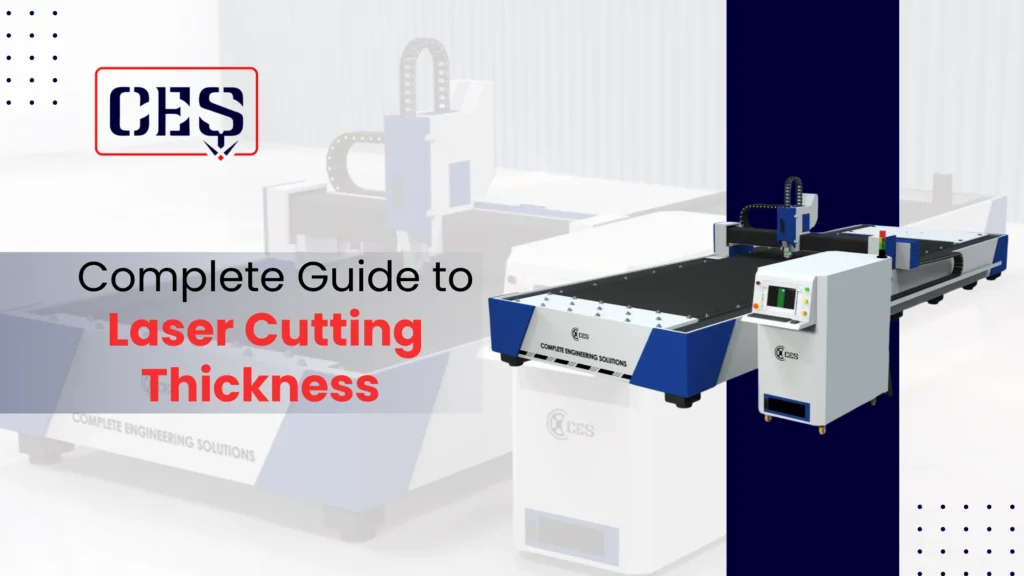
Complete Guide to Laser Cutting Thickness: Materials, Power & Speed Explained

Laser cutting machine is one of the most widely used manufacturing processes in modern metal fabrication. From automotive parts and industrial machinery to architectural structures and precision components, laser cutting delivers unmatched accuracy, speed, and clean edges. But one of the most common questions manufacturers ask is: How thick can a laser cutter cut? The answer depends on several key factors, including the material type, laser power, cutting speed, assist gas, and machine configuration.In this complete guide to laser cutting machine thickness, we’ll break down everything you need to know about laser cutting thickness, power requirements, and how to achieve the best cutting results. What Does Laser Cutting Thickness Mean? Laser cutting thickness refers to the maximum material depth a laser machine can cut through cleanly and consistently. It’s important to understand: Cutting thickness is different from engraving depth Thicker materials require higher laser power The cutting limit depends heavily on material properties For example, a fiber laser may cut 20mm mild steel easily, but struggle with much thinner copper due to reflectivity. Key Factors That Affect Laser Cutting Thickness Laser cutting performance is influenced by several technical factors. Let’s explore them one by one. 1. Laser Power (Wattage) Laser power is the most direct factor affecting cutting thickness. Higher wattage lasers deliver more energy into the material, allowing deeper cuts. Typical industrial fiber laser power ranges: 1kW – 3kW (thin to medium metals) 6kW – 12kW (thicker industrial plates) 20kW+ (heavy-duty structural cutting) Example: 2kW fiber laser → cuts ~6mm mild steel 6kW fiber laser → cuts ~20mm mild steel 12kW fiber laser → cuts 30mm+ steel 2. Material Type Different materials react differently to laser energy. Key material properties include: Melting point Reflectivity Thermal conductivity Density Metals require higher power and assist gas for efficient cutting. Copper and aluminum are harder to cut due to reflection, while mild steel is easier. 3. Cutting Speed Cutting speed determines how long the laser beam stays on a specific point. Faster speed → cleaner edges, less heat distortion Slower speed → deeper cuts, but risk of burning or dross Finding the right balance is essential for thick cutting. 4. Assist Gas (Oxygen, Nitrogen, Air) Assist gas improves cutting efficiency by removing molten material. Common gases include: Oxygen (O₂) Best for thick mild steel Supports combustion and increases cutting speed Leaves an oxidized edge Nitrogen (N₂) Best for stainless steel Produces clean, bright edges Higher operating cost Compressed Air Low-cost option Works for thin sheet cutting 5. Beam Quality & Focus Lens Laser cutting thickness also depends on: Spot size Beam quality (M² factor) Correct focal positioning A well-focused beam produces: Narrow kerf width Higher energy concentration Better thick-cut penetration Maximum Laser Cutting Thickness by Material Below is a general guide for industrial fiber lasers: Mild Steel (Carbon Steel)   Mild steel is the easiest metal to laser cut. Laser Power Max Thickness 1kW 3–5mm 3kW 10–12mm 6kW 20–22mm 12kW 30–35mm Best assist gas: Oxygen Stainless Steel   Stainless steel requires nitrogen for clean edges. Laser Power Max Thickness 1kW 2–4mm 3kW 8–10mm 6kW 15–18mm 12kW 25mm+ Best assist gas: Nitrogen Aluminum   Aluminum is reflective and needs higher power. Laser Power Max Thickness 3kW 6–8mm 6kW 12–15mm 12kW 20mm+ Best assist gas: Nitrogen Copper & Brass These are among the most difficult metals due to reflectivity. Requires specialized fiber laser systems Thickness limits are lower compared to steel Typical cutting range: 1–6mm depending on machine design Laser Type Comparison: Thickness Capability Choosing the right laser system is critical for industrial cutting. Fiber Laser   Fiber laser cutting in modern metal fabrication is widely preferred due to its high precision, faster processing speed, low maintenance, and excellent performance when cutting thick metals like steel, stainless steel, and aluminum in industrial applications. Advantages of fiber laser: High speed Thick cutting ability Low maintenance Used for: Steel plates Stainless steel Industrial fabrication Common Problems When Cutting Thick Materials Cutting thicker metals introduces challenges such as: Excessive dross buildup Rough edge finish Incomplete penetration Heat distortion and warping Slower production speed Proper settings and equipment help overcome these issues. Tips to Improve Thick Laser Cutting Performance Here are proven strategies: Use higher assist gas pressure Optimize cutting speed and focus Keep nozzles aligned properly Choose the correct lens for thick cutting Maintain stable beam quality Upgrade to higher wattage if needed Industrial Applications of Thick Laser Cutting Thick plate laser cutting is widely used in: Structural steel fabrication Automotive chassis manufacturing Heavy machinery parts Shipbuilding and offshore projects Power plant equipment How to Choose the Right Laser Cutting Machine Before investing, ask: What maximum thickness do you need to cut? Which materials are most common? Do you need clean edges (nitrogen cutting)? What production speed is required? What level of automation is needed? Choosing the right machine ensures better ROI and long-term productivity. Conclusion Laser cutting thickness depends on a combination of: Laser power Material type Cutting speed Assist gas Beam quality and focus For manufacturers cutting thick industrial plates, high-power fiber lasers deliver the best results. If you’re planning a fabrication setup or need expert guidance on industrial cutting solutions, working with experienced engineering partners is key.

Complete Guide to Laser Cutting Thickness: Materials, Power & Speed Explained Read More »

What are The Key Features of Laser Welding Machines?

What are The Key Features of Laser Welding Machines?

Laser welding technology has significantly changed the modern world, mainly in the sense that it has changed the way things are manufactured. Traditional welding techniques sometimes seem to be outmatched by the advanced and unbeatable features offered by laser welding technology. Industries in the world are demanding better welding technology to ensure quality production, and as a result, trusted laser welding machine suppliers have emerged. Knowledge of the major aspects of a laser welding machine proves to be beneficial for running a successful business. High Precision and Accuracy One of the most important features of a laser welding machine is its exceptional precision. Focused Laser Beam Technology Laser welding uses a highly concentrated beam of light to create a small and controlled heat-affected zone. This ensures: Minimal distortion Clean and narrow weld seams Reduced post-processing requirements Such accuracy is especially valuable in industries that require micro-welding or intricate component assembly. Ideal for Delicate Materials Laser welding machines can join thin sheets and delicate components without causing damage. This makes them suitable for electronics, jewellery, and medical instrument manufacturing. High-Speed Welding Performance Speed plays an important role in industrial productivity. Modern systems developed by leading laser welding machine manufacturers are designed for rapid operations. Faster Production Cycles A major difference is visible in the comparatively higher speeds of the laser welding process, which is much faster than the conventional methods of TIG or MIG welding. Automation Compatibility Most of the welding lasers can readily be integrated with robotic systems and computer-controlled systems. Strong and Clean Weld Quality Weld quality directly impacts product durability and safety. Deep Penetration Welding Laser beams provide deep penetration with less heat input. This results in strong weld joints that can withstand high stress and load conditions. Minimal Spatter and Cleanup Unlike conventional welding techniques, laser welding produces very little spatter. The clean finish reduces the need for grinding or polishing, saving time and labor costs. Looking to Upgrade Your Welding Efficiency? If you want advanced technology, improved precision, and reliable performance, it’s time to explore solutions from CES Laser Machine Private Limited. Their advanced systems are designed to meet many industrial requirements while ensuring productivity. Click here Energy Efficiency and Cost Savings Energy consumption is a major concern for manufacturing facilities. Lower Heat Input Laser welding machines have a controlled output, hence less waste heat, which is efficient. This prevents damage to materials, further resulting in reduced power consumption. Less Material Waste The precision with which they work ensures that there is minimal wastage, thus saving money. User-Friendly Operation and Safety Features Modern laser welding systems are designed with operator convenience in mind. User-Friendly Interface It permits operators, through digital control panels and touchscreen displays, to easily vary parameters like power, speed, and pulse settings. Advanced Safety Features Safety at work was ensured by built-in safety features such as protective enclosures, emergency stop systems, and automatic shutdown functions. Versatility Across Industries Laser welding machines are highly adaptable and suitable for various materials, including stainless steel, aluminium, carbon steel, and alloys. Wide Industrial Applications From automotive body parts and aerospace components to battery manufacturing and kitchen equipment, laser welding machines serve multiple sectors with consistent performance. Conclusion The demand for advanced welding technology is still on the rise as industries plan ways to improve laser welding productivity and quality standards. The outstanding features associated with these machines, such as precision, speed, penetration, energy saving, and automation, make these systems an ideal investment for any industry. By making an intelligent choice with CES Laser Machine Private Limited, enterprises can improve operational efficiency and be able to cope with today’s rapidly changing industries.

What are The Key Features of Laser Welding Machines? Read More »

What are the Applications of Laser Cutting Machines?

What are the Applications of Laser Cutting Machines?

The laser cutting machine has revolutionized the manufacturing industry by providing unparallelled precision, speed, and flexibility. Whether it is large-scale industrial cutting or complex decorative cutting, the laser has emerged as a key tool for many industries. With the evolution of Industrial Laser Cutting, particularly in fiber lasers, manufacturers are now able to produce cleaner cuts, less waste, and greater productivity than conventional cutting processes. Understanding Laser Cutting Technology A Laser Cutting Machine uses a high-powered laser beam for cutting, engraving, or shaping materials with absolute precision. The laser melts and burns the material, and a gas jet removes the excess material, thus producing smooth edges. The most in-demand type available in the market today is the Fiber Laser Cutting Machine, which is known for its efficiency and ability to cut reflective metals like aluminum, brass, and copper. Applications of Laser Cutting Machines Across Industries 1. Metal Fabrication and Engineering Metal fabrication is one of the most common applications of laser cutting machines. The industry relies on Industrial Laser Cutting for manufacturing parts like brackets, frames, enclosures, and structural components. The process is known for its high accuracy, which makes it suitable for mass production as well as custom manufacturing. 2. Automotive and Transportation Industry Laser cutting machines are essential in the automotive industry for manufacturing parts like chassis parts, exhaust systems, panels, and precision brackets. The speed and repeatability of a Fiber Laser Cutting Machine enable the automotive industry to maintain a high level of quality as well as production. 3. Electrical and Electronics Manufacturing In the electronics industry, laser cutting is employed in the manufacture of control panels, electrical cabinets, and complex metal components. The non-contact process of laser cutting eliminates material distortion, which is important when dealing with thin materials. Searching for advanced laser cutting technology customised to your manufacturing requirements? CES Laser Machine Private Limited provides high-performance laser technology for precision, reliability, and industrial productivity. Find the best solution to enhance your manufacturing capabilities today. Click here 4. Architecture, Signage, and Interior Design Laser cutting machines are used extensively in architectural metalwork, decorative panels, railings, and signage. Designers opt for laser cutting because of its ability to cut complex patterns and details, which are not possible with traditional cutting tools. This sector is in high demand for customized designs. 5. Sheet Metal and Job Work Services Job work sectors have benefited immensely from the use of laser cutting machines because of their short turnaround times and material wastage. In manufacturing centers such as Ahmedabad, there has been an increased demand for Ces Laser Cutting machines. 6. Industrial Equipment and Machinery Manufacturing Laser cutting is globally used in the manufacturing of parts for industrial machinery such as gears, machine bodies, and mounting plates. The accuracy and consistency of laser-cut parts enhance the performance of the machinery. Why Fiber Laser Cutting Machines Are Preferred A Fiber Laser Cutting Machine is preferred because of its low maintenance, high speed, and high-performance capabilities when it comes to cutting metal sheets. When compared to the traditional CO₂ laser cutting machine, the fiber laser machine consumes less power and has a longer lifespan. Conclusion Laser cutting machines have become an essential tool in many industries, providing accuracy, productivity, and flexibility in design. Whether for industrial or artistic purposes, the technology of laser cutting continues to influence the future of manufacturing. With advanced solutions and performance, CES Laser Machine Private Limited is a major contributor to the support of industries with modern laser cutting machines designed for today’s manufacturing requirements.

What are the Applications of Laser Cutting Machines? Read More »