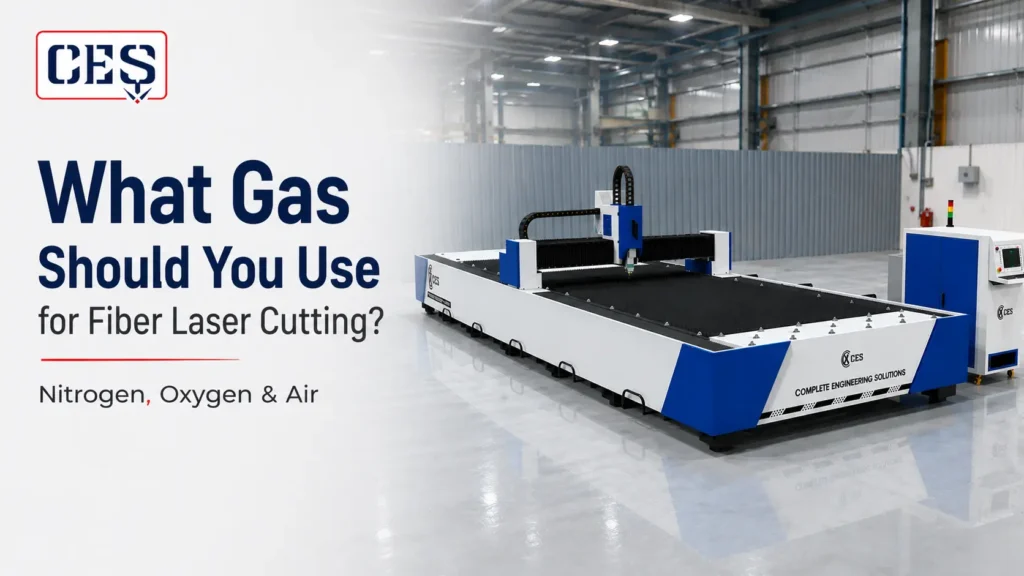
Fiber Laser Cutting Gas Guide: Nitrogen, Oxygen & Air
If you’re running a fiber laser machine and struggling with rough edges, discoloration, or slow cut speeds, there’s a good chance your assist gas choice is the problem, not your machine settings. The type of gas you use for fiber laser cutting directly affects cut quality, edge finish, material compatibility, and your overall operating cost. Whether you’re cutting mild steel, stainless steel, aluminum, or brass, using the wrong gas can ruin an otherwise perfect setup. In this guide, we break down the three main assist gases, nitrogen, oxygen, and compressed air, so you can make the right call for your specific application. Why Assist Gas Matters in Fiber Laser Cutting Before we compare gases, let’s understand what assist gas actually does during the laser cutting process. When a fiber laser beam hits the material, assist gas is blown through the cutting nozzle at high pressure. It serves three key purposes: • Ejects molten material from the kerf (cut channel) • Cools the cut zone and surrounding area • Controls or prevents oxidation on the cut edge The right assist gas keeps the cut clean, fast, and burr-free. The wrong one creates dross buildup, discolored edges, or significantly increases your per-hour operating cost. The 3 Main Gases Used in Fiber Laser Cutting Here is a quick comparison before we dive into each gas in detail: Gas Best For Materials Cut Edge Quality Relative Cost Nitrogen (N2) Stainless steel, aluminum, brass, copper Oxide-free, bright silver High Oxygen (O2) Mild steel / carbon steel Slight oxide layer, darker edge Low–Medium Compressed Air Thin non-ferrous metals, mild steel Acceptable (slight burr possible) Very Low Nitrogen (N2): The Clean-Cut Champion Nitrogen is the most widely used assist gas for fiber laser cutting, especially when cut edge quality is a top priority. Because nitrogen is inert, it does not react with the metal during cutting. This means there is no oxidation on the cut edge – you get a clean, bright, silver finish that is ready for welding or coating without any post-processing. Best For: • Stainless steel (all thicknesses) • Aluminum • Brass and copper • Any application requiring a clean, weld-ready edge Key Advantages: • Zero oxidation – bright, clean edge finish • No secondary cleaning or grinding required • Ideal for medical, food-grade, and decorative applications Disadvantages: • Higher cost compared to oxygen or air • Requires higher pressure (10–20 bar) which increases gas consumption • Slower cutting speeds on thick mild steel Typical nitrogen cutting pressure ranges from 10 to 20 bar depending on material thickness. Thicker materials require more pressure to fully eject the melt from the kerf. Oxygen (O2): Speed and Power for Mild Steel Oxygen is the go-to assist gas when you are cutting mild steel or carbon steel at high volume. Unlike nitrogen, oxygen actively reacts with the metal – this exothermic reaction adds energy to the cut, allowing faster cutting speeds and better penetration on thick material. Best For: • Mild steel and carbon steel (especially thicker sections) • Applications where cut speed matters more than edge color • Structural and industrial fabrication Key Advantages: • Faster cutting speeds on thick mild steel • Lower gas pressure required (0.5–3 bar) • Lower cost per hour versus nitrogen Disadvantages: • Creates an oxide layer on the cut edge (darker, brownish color) • Not suitable for stainless steel, aluminum, or non-ferrous metals • Parts may need grinding or blasting before painting or welding One important note: never use oxygen on stainless steel or aluminum. It creates heavy oxidation and a rough, discolored edge that is very difficult to remove. Save oxygen strictly for mild steel applications. Compressed Air: The Budget-Friendly Option Compressed air is the most cost-effective assist gas option. It is approximately 78% nitrogen and 21% oxygen, which means it provides partial inert protection while also allowing some oxidation reaction. Compressed air works well for thin materials and for operations where operating cost is the primary concern. Many shops use it for cutting aluminum sheet under 3mm, mild steel under 2mm, or for parts that will be powder-coated anyway (where edge color does not matter). Best For: • Thin aluminum and non-ferrous sheet metal (under 3mm) • Thin mild steel where cost matters most • Parts that will be painted or powder-coated after cutting • Prototype or low-volume work where gas cost needs to stay low Key Advantages: • Extremely low operating cost – just the compressor running cost • No gas cylinders or bulk tank required • Good enough quality for many general fabrication jobs Disadvantages: • Lower cut quality than pure nitrogen or oxygen • Can produce slight burring on the cut edge • Moisture and oil in compressed air can damage the lens if filtration is not adequate • Not suitable for thick materials or precision applications If you decide to use compressed air, invest in a high-quality air dryer and filtration system. Moisture and oil contamination from a poorly maintained compressor can damage your laser optics, leading to expensive repairs. How to Choose the Right Gas for Your Job Use this simple decision framework: 1. Cutting stainless steel? : Always use Nitrogen 2. Cutting aluminum or brass? : Use Nitrogen for best results, Compressed Air for thin gauge on a budget 3. Cutting mild steel thicker than 4mm at high volume? : Use Oxygen for speed 4. Cutting thin mild
Fiber Laser Cutting Gas Guide: Nitrogen, Oxygen & Air Read More »