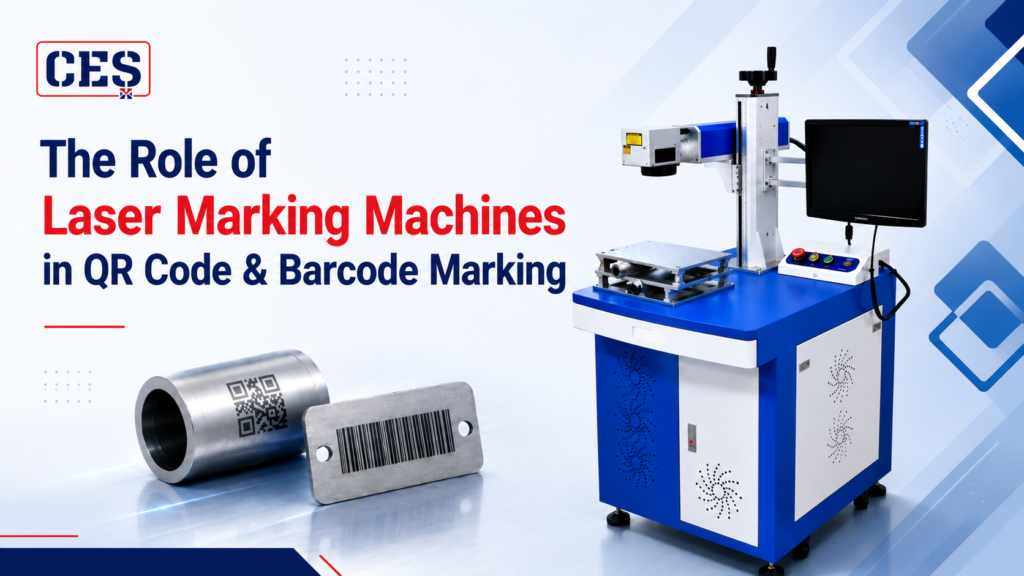
Every product that moves through a modern supply chain needs to be tracked, traced, and verified at some point. A scratched barcode or a faded label can hold up an entire production line, trigger a compliance issue, or make a product impossible to recall if something goes wrong. That’s exactly why more manufacturers are moving away from printed labels and adopting a laser marking machine for QR code and barcode marking instead.
Unlike ink-based printing, laser marking doesn’t sit on top of the material. It changes the surface itself, which means the code stays readable long after labels would have peeled off, faded, or worn away. If you’re a production manager, quality engineer, or procurement professional evaluating traceability solutions, this guide walks you through how the technology works, which industries rely on it, and what to look for before you invest.
What Is a Laser Marking Machine for QR Code and Barcode Marking?
A laser marking machine for QR code and barcode marking uses a focused laser beam to etch, engrave, or alter the surface of a material to create a permanent, scannable code. Instead of printing ink onto a label and sticking it to a product, the laser interacts directly with the material’s surface, producing a mark that becomes part of the product itself.
This is different from traditional barcode printing in one important way: durability. A printed label can be removed, damaged, or contaminated. A laser-marked code is built into the surface, so it holds up under heat, chemical exposure, abrasion, and repeated handling, which is exactly what most industrial environments demand.
How Laser Marking Machines Work for QR Codes and Barcodes
The process is more straightforward than it sounds, but the details matter for getting a code that scans correctly every time.
- File preparation: The QR code or barcode design is generated in marking software and linked to the required data (batch number, serial number, product ID, etc.).
- Laser parameter setup: Settings like power, speed, frequency, and pulse duration are configured based on the material type and desired mark depth.
- Beam delivery: A galvanometer scanning system directs the laser beam across the material surface in the exact pattern of the code.
- Surface interaction: Depending on the material, the laser either removes a thin surface layer, causes an oxidation reaction, or creates a controlled discoloration to form the code.
- Verification: Many industrial setups include a barcode verification camera to confirm the mark meets grade standards (ISO/IEC 15416 for barcodes and ISO/IEC 18004 for QR codes) before the product moves down the line.
This entire cycle typically takes a fraction of a second per part, which is why laser marking integrates well into high-speed production environments.
Why Manufacturers Choose Laser Marking for QR Codes
Traceability is the core reason most companies switch to laser marking, but it’s not the only one. Here’s what typically drives the decision:
Permanent, tamper-resistant codes
Since the mark is part of the material, it can’t be peeled off or easily altered, which matters for industries dealing with counterfeiting or regulatory audits.
Consistent readability
A well-calibrated laser system produces uniform contrast and depth, which keeps scan rates high and reduces the manual rescans that slow down packaging lines.
No consumables
There’s no ink, ribbon, or adhesive label to restock, which cuts down on recurring costs and eliminates a common point of production downtime.
Works across materials
A single machine can often mark metal, plastic, and coated surfaces, which reduces the need for multiple labeling systems on a mixed production line.
Faster changeovers
Marking parameters and code data can be updated instantly in software, so switching between product batches doesn’t require new label stock or die changes.
Industries That Rely on QR Code and Barcode Laser Marking
Automotive and Auto Components
Automotive parts often need to carry a traceable identifier for their entire service life, sometimes 10 to 15 years. Engine components, brake parts, and chassis elements are commonly laser-marked with data matrix codes that survive heat, oil exposure, and vibration far better than adhesive labels.
Electronics and PCB Manufacturing
Circuit boards and electronic housings are marked with tiny, high-resolution QR codes for component traceability and serial tracking. Because laser marking doesn’t apply pressure or heat stress across the whole part, it’s suitable for delicate electronic assemblies where a label or stamping process could cause damage.
Pharmaceuticals and Medical Devices
Regulatory bodies increasingly require permanent, tamper-evident identification on medical instruments and pharmaceutical packaging for track-and-trace compliance. Laser-marked codes on surgical tools and device casings won’t wash off during sterilization cycles, unlike printed alternatives.
Industrial and Heavy Engineering
Metal components, tools, and machine parts go through laser marking for asset tracking, warranty verification, and inventory control. These codes need to survive machining fluids, rust, and repeated handling, conditions where printed labels typically fail within weeks.
Packaging and Consumer Goods
Even where full permanence isn’t required, manufacturers use laser marking on primary packaging for date codes, batch numbers, and QR codes linked to product authentication or consumer-facing content, especially where line speed and consistency matter more than depth of mark.
Aerospace
Aerospace components require some of the strictest traceability standards in any industry. Laser-marked data matrix codes allow individual parts to be tracked across their entire lifecycle, from manufacturing through maintenance, repair, and eventual decommissioning.
Materials a Laser Marking Machine Can Handle
One of the practical advantages of an industrial laser marking machine is its ability to work across a wide range of materials without switching equipment:
| Material Type | Common Applications | Typical Marking Result |
| Stainless steel & metals | Auto parts, tools, medical devices | High-contrast engraved or annealed mark |
| Aluminum | Electronics housings, aerospace parts | Dark, oxidized mark with good contrast |
| Plastics (ABS, PC, PP) | Consumer goods, electronic casings | Surface etch or color-change mark |
| Coated/painted surfaces | Automotive components | Surface layer removal exposing base material |
| Anodized aluminum | Nameplates, industrial equipment | Clean, precise mark without material loss |
The right laser source (fiber, CO2, or UV) depends heavily on the material. Fiber lasers are the most common choice for metal marking, while CO2 systems tend to work better on organic materials like wood, glass, or certain plastics.
Choosing the Right Laser Marking Machine for Barcode Marking
Before selecting a system, it helps to evaluate a few practical factors rather than going by specifications alone.
- Material compatibility: Confirm the laser type matches the materials you actually mark, not just the ones in the sales brochure.
- Marking speed vs. line speed: The machine’s cycle time should match or exceed your production line’s throughput to avoid becoming a bottleneck.
- Code verification support: Look for built-in or compatible verification systems, especially if you operate in a regulated industry.
- Software flexibility: The system should support variable data marking (sequential serial numbers, batch-specific QR codes) without manual reprogramming for every run.
- Footprint and integration: Check whether the machine can be integrated into your existing conveyor or workstation setup without major retooling.
- After-sales support: Laser sources and optics need periodic servicing, so local support and spare parts availability matter more than most buyers initially expect.
Common Mistakes to Avoid
Even with the right machine, a few setup mistakes tend to show up repeatedly on production floors:
- Using default laser parameters across different materials instead of calibrating for each one, which leads to inconsistent scan rates.
- Skipping barcode grade verification, which means defective codes only get discovered after they fail at the point of scan.
- Underestimating dust and fume extraction needs, especially when marking coated or painted surfaces.
- Choosing a machine based on price alone without checking whether it can handle future material or code format changes.
Final Thoughts
A laser marking machine for QR code and barcode marking isn’t just a labeling upgrade. It’s a traceability investment that affects quality control, compliance, and how efficiently your production line runs day to day. Getting a permanent, scannable code right the first time reduces rework, protects your product data from tampering, and keeps your supply chain accountable from raw material to end user.
Frequently Asked Questions
1. How do laser marking machines work for barcodes?
A laser marking machine directs a focused beam onto the material’s surface in the exact pattern of the barcode or QR code. Depending on the material, the laser either removes a thin surface layer, triggers an oxidation reaction, or causes a controlled color change, creating a permanent, high-contrast mark that scanners can read reliably.
2. What are the benefits of using laser marking for QR codes?
Laser-marked QR codes are permanent, resistant to wear, chemicals, and heat, and don’t rely on ink or adhesive labels that can peel or fade. This results in more consistent scan rates, lower long-term costs, and better protection against tampering or counterfeiting compared to printed labels.
3. Can laser marking machines handle different materials for barcodes?
Yes. Depending on the laser source, a single machine can mark metals, plastics, coated surfaces, and anodized materials. Fiber lasers are typically used for metals, while CO2 or UV lasers are better suited to certain plastics, glass, or organic materials. Matching the laser type to your material is key to getting a clean, scannable mark.
4. What are the maintenance requirements for laser marking machines?
Routine maintenance includes cleaning the lens and optics to prevent dust buildup, checking the cooling system, and periodically calibrating beam alignment. Most industrial machines need only light, scheduled maintenance, but staying consistent with it prevents mark quality issues and unplanned downtime.
5. What types of barcodes can be marked with laser machines?
Laser marking machines can produce 1D barcodes (like Code 128 or EAN), as well as 2D codes such as QR codes and Data Matrix codes. The choice usually depends on how much data needs to be encoded and the space available on the product surface, with 2D codes preferred where more information or smaller mark sizes are required.