
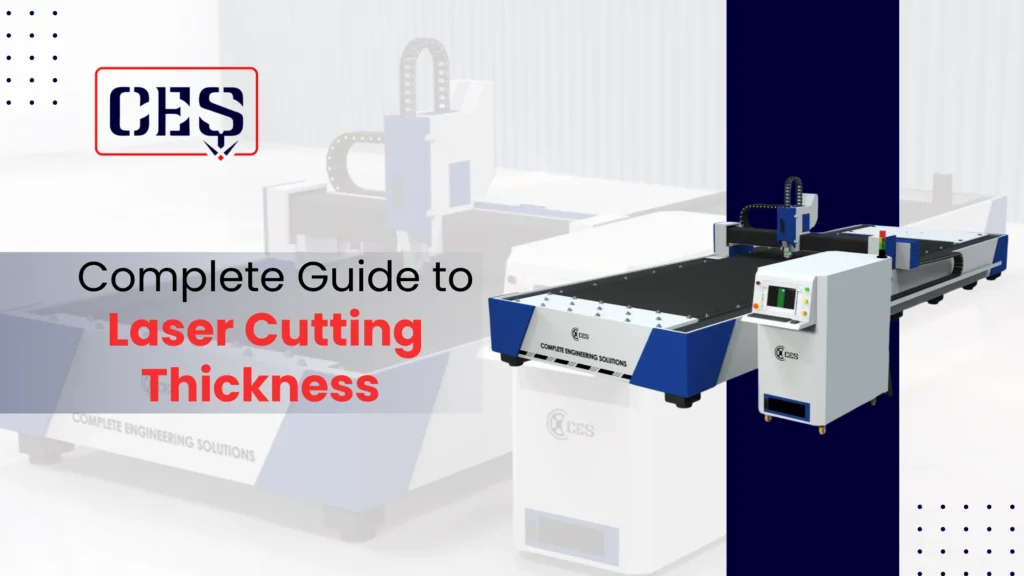
Complete Guide to Laser Cutting Thickness: Materials, Power & Speed Explained
Laser cutting machine is one of the most widely used manufacturing processes in modern metal fabrication. From automotive parts and industrial machinery to architectural structures and precision components, laser cutting delivers unmatched accuracy, speed, and clean edges. But one of the most common questions manufacturers ask is: How thick can a laser cutter cut? The answer depends on several key factors, including the material type, laser power, cutting speed, assist gas, and machine configuration.In this complete guide to laser cutting machine thickness, we’ll break down everything you need to know about laser cutting thickness, power requirements, and how to achieve the best cutting results. What Does Laser Cutting Thickness Mean? Laser cutting thickness refers to the maximum material depth a laser machine can cut through cleanly and consistently. It’s important to understand: Cutting thickness is different from engraving depth Thicker materials require higher laser power The cutting limit depends heavily on material properties For example, a fiber laser may cut 20mm mild steel easily, but struggle with much thinner copper due to reflectivity. Key Factors That Affect Laser Cutting Thickness Laser cutting performance is influenced by several technical factors. Let’s explore them one by one. 1. Laser Power (Wattage) Laser power is the most direct factor affecting cutting thickness. Higher wattage lasers deliver more energy into the material, allowing deeper cuts. Typical industrial fiber laser power ranges: 1kW – 3kW (thin to medium metals) 6kW – 12kW (thicker industrial plates) 20kW+ (heavy-duty structural cutting) Example: 2kW fiber laser → cuts ~6mm mild steel 6kW fiber laser → cuts ~20mm mild steel 12kW fiber laser → cuts 30mm+ steel 2. Material Type Different materials react differently to laser energy. Key material properties include: Melting point Reflectivity Thermal conductivity Density Metals require higher power and assist gas for efficient cutting. Copper and aluminum are harder to cut due to reflection, while mild steel is easier. 3. Cutting Speed Cutting speed determines how long the laser beam stays on a specific point. Faster speed → cleaner edges, less heat distortion Slower speed → deeper cuts, but risk of burning or dross Finding the right balance is essential for thick cutting. 4. Assist Gas (Oxygen, Nitrogen, Air) Assist gas improves cutting efficiency by removing molten material. Common gases include: Oxygen (O₂) Best for thick mild steel Supports combustion and increases cutting speed Leaves an oxidized edge Nitrogen (N₂) Best for stainless steel Produces clean, bright edges Higher operating cost Compressed Air Low-cost option Works for thin sheet cutting 5. Beam Quality & Focus Lens Laser cutting thickness also depends on: Spot size Beam quality (M² factor) Correct focal positioning A well-focused beam produces: Narrow kerf width Higher energy concentration Better thick-cut penetration Maximum Laser Cutting Thickness by Material Below is a general guide for industrial fiber lasers: Mild Steel (Carbon Steel) Mild steel is the easiest metal to laser cut. Laser Power Max Thickness 1kW 3–5mm 3kW 10–12mm 6kW 20–22mm 12kW 30–35mm Best assist gas: Oxygen Stainless Steel Stainless steel requires nitrogen for clean edges. Laser Power Max Thickness 1kW 2–4mm 3kW 8–10mm 6kW 15–18mm 12kW 25mm+ Best assist gas: Nitrogen Aluminum Aluminum is reflective and needs higher power. Laser Power Max Thickness 3kW 6–8mm 6kW 12–15mm 12kW 20mm+ Best assist gas: Nitrogen Copper & Brass These are among the most difficult metals due to reflectivity. Requires specialized fiber laser systems Thickness limits are lower compared to steel Typical cutting range: 1–6mm depending on machine design Laser Type Comparison: Thickness Capability Choosing the right laser system is critical for industrial cutting. Fiber Laser Fiber laser cutting in modern metal fabrication is widely preferred due to its high precision, faster processing speed, low maintenance, and excellent performance when cutting thick metals like steel, stainless steel, and aluminum in industrial applications. Advantages of fiber laser: High speed Thick cutting ability Low maintenance Used for: Steel plates Stainless steel Industrial fabrication Common Problems When Cutting Thick Materials Cutting thicker metals introduces challenges such as: Excessive dross buildup Rough edge finish Incomplete penetration Heat distortion and warping Slower production speed Proper settings and equipment help overcome these issues. Tips to Improve Thick Laser Cutting Performance Here are proven strategies: Use higher assist gas pressure Optimize cutting speed and focus Keep nozzles aligned properly Choose the correct lens for thick cutting Maintain stable beam quality Upgrade to higher wattage if needed Industrial Applications of Thick Laser Cutting Thick plate laser cutting is widely used in: Structural steel fabrication Automotive chassis manufacturing Heavy machinery parts Shipbuilding and offshore projects Power plant equipment How to Choose the Right Laser Cutting Machine Before investing, ask: What maximum thickness do you need to cut? Which materials are most common? Do you need clean edges (nitrogen cutting)? What production speed is required? What level of automation is needed? Choosing the right machine ensures better ROI and long-term productivity. Conclusion Laser cutting thickness depends on a combination of: Laser power Material type Cutting speed Assist gas Beam quality and focus For manufacturers cutting thick industrial plates, high-power fiber lasers deliver the best results. If you’re planning a fabrication setup or need expert guidance on industrial cutting solutions, working with experienced engineering partners is key.
Complete Guide to Laser Cutting Thickness: Materials, Power & Speed Explained Read More »