Uncategorized

complete guide to laser cutting thickness

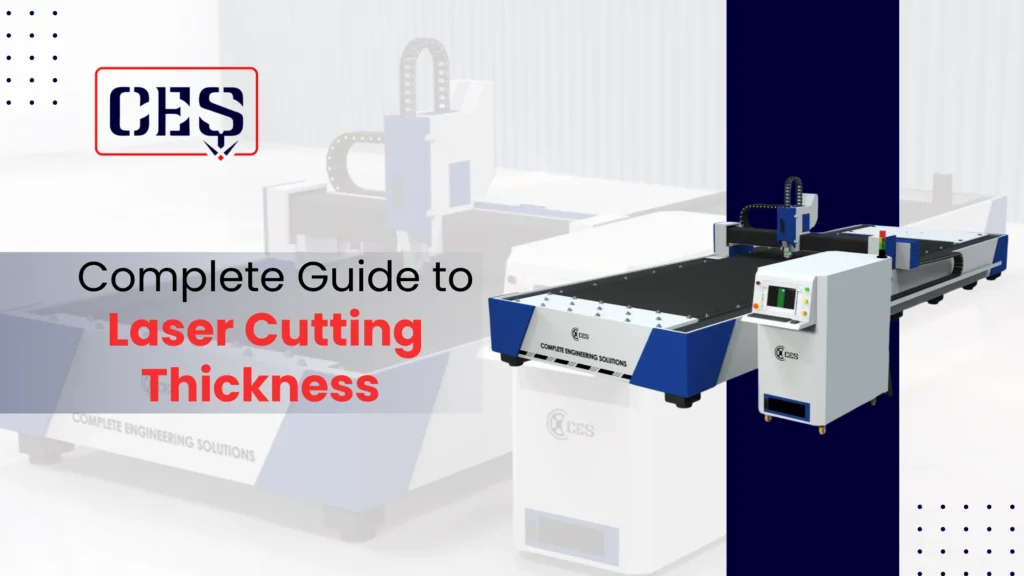
Complete Guide to Laser Cutting Thickness: Materials, Power & Speed Explained

Laser cutting machine is one of the most widely used manufacturing processes in modern metal fabrication. From automotive parts and industrial machinery to architectural structures and precision components, laser cutting delivers unmatched accuracy, speed, and clean edges. But one of the most common questions manufacturers ask is: How thick can a laser cutter cut? The answer depends on several key factors, including the material type, laser power, cutting speed, assist gas, and machine configuration.In this complete guide to laser cutting machine thickness, we’ll break down everything you need to know about laser cutting thickness, power requirements, and how to achieve the best cutting results. What Does Laser Cutting Thickness Mean? Laser cutting thickness refers to the maximum material depth a laser machine can cut through cleanly and consistently. It’s important to understand: Cutting thickness is different from engraving depth Thicker materials require higher laser power The cutting limit depends heavily on material properties For example, a fiber laser may cut 20mm mild steel easily, but struggle with much thinner copper due to reflectivity. Key Factors That Affect Laser Cutting Thickness Laser cutting performance is influenced by several technical factors. Let’s explore them one by one. 1. Laser Power (Wattage) Laser power is the most direct factor affecting cutting thickness. Higher wattage lasers deliver more energy into the material, allowing deeper cuts. Typical industrial fiber laser power ranges: 1kW – 3kW (thin to medium metals) 6kW – 12kW (thicker industrial plates) 20kW+ (heavy-duty structural cutting) Example: 2kW fiber laser → cuts ~6mm mild steel 6kW fiber laser → cuts ~20mm mild steel 12kW fiber laser → cuts 30mm+ steel 2. Material Type Different materials react differently to laser energy. Key material properties include: Melting point Reflectivity Thermal conductivity Density Metals require higher power and assist gas for efficient cutting. Copper and aluminum are harder to cut due to reflection, while mild steel is easier. 3. Cutting Speed Cutting speed determines how long the laser beam stays on a specific point. Faster speed → cleaner edges, less heat distortion Slower speed → deeper cuts, but risk of burning or dross Finding the right balance is essential for thick cutting. 4. Assist Gas (Oxygen, Nitrogen, Air) Assist gas improves cutting efficiency by removing molten material. Common gases include: Oxygen (O₂) Best for thick mild steel Supports combustion and increases cutting speed Leaves an oxidized edge Nitrogen (N₂) Best for stainless steel Produces clean, bright edges Higher operating cost Compressed Air Low-cost option Works for thin sheet cutting 5. Beam Quality & Focus Lens Laser cutting thickness also depends on: Spot size Beam quality (M² factor) Correct focal positioning A well-focused beam produces: Narrow kerf width Higher energy concentration Better thick-cut penetration Maximum Laser Cutting Thickness by Material Below is a general guide for industrial fiber lasers: Mild Steel (Carbon Steel)   Mild steel is the easiest metal to laser cut. Laser Power Max Thickness 1kW 3–5mm 3kW 10–12mm 6kW 20–22mm 12kW 30–35mm Best assist gas: Oxygen Stainless Steel   Stainless steel requires nitrogen for clean edges. Laser Power Max Thickness 1kW 2–4mm 3kW 8–10mm 6kW 15–18mm 12kW 25mm+ Best assist gas: Nitrogen Aluminum   Aluminum is reflective and needs higher power. Laser Power Max Thickness 3kW 6–8mm 6kW 12–15mm 12kW 20mm+ Best assist gas: Nitrogen Copper & Brass These are among the most difficult metals due to reflectivity. Requires specialized fiber laser systems Thickness limits are lower compared to steel Typical cutting range: 1–6mm depending on machine design Laser Type Comparison: Thickness Capability Choosing the right laser system is critical for industrial cutting. Fiber Laser   Fiber laser cutting in modern metal fabrication is widely preferred due to its high precision, faster processing speed, low maintenance, and excellent performance when cutting thick metals like steel, stainless steel, and aluminum in industrial applications. Advantages of fiber laser: High speed Thick cutting ability Low maintenance Used for: Steel plates Stainless steel Industrial fabrication Common Problems When Cutting Thick Materials Cutting thicker metals introduces challenges such as: Excessive dross buildup Rough edge finish Incomplete penetration Heat distortion and warping Slower production speed Proper settings and equipment help overcome these issues. Tips to Improve Thick Laser Cutting Performance Here are proven strategies: Use higher assist gas pressure Optimize cutting speed and focus Keep nozzles aligned properly Choose the correct lens for thick cutting Maintain stable beam quality Upgrade to higher wattage if needed Industrial Applications of Thick Laser Cutting Thick plate laser cutting is widely used in: Structural steel fabrication Automotive chassis manufacturing Heavy machinery parts Shipbuilding and offshore projects Power plant equipment How to Choose the Right Laser Cutting Machine Before investing, ask: What maximum thickness do you need to cut? Which materials are most common? Do you need clean edges (nitrogen cutting)? What production speed is required? What level of automation is needed? Choosing the right machine ensures better ROI and long-term productivity. Conclusion Laser cutting thickness depends on a combination of: Laser power Material type Cutting speed Assist gas Beam quality and focus For manufacturers cutting thick industrial plates, high-power fiber lasers deliver the best results. If you’re planning a fabrication setup or need expert guidance on industrial cutting solutions, working with experienced engineering partners is key.

Complete Guide to Laser Cutting Thickness: Materials, Power & Speed Explained Read More »

What are The Key Features of Laser Welding Machines?

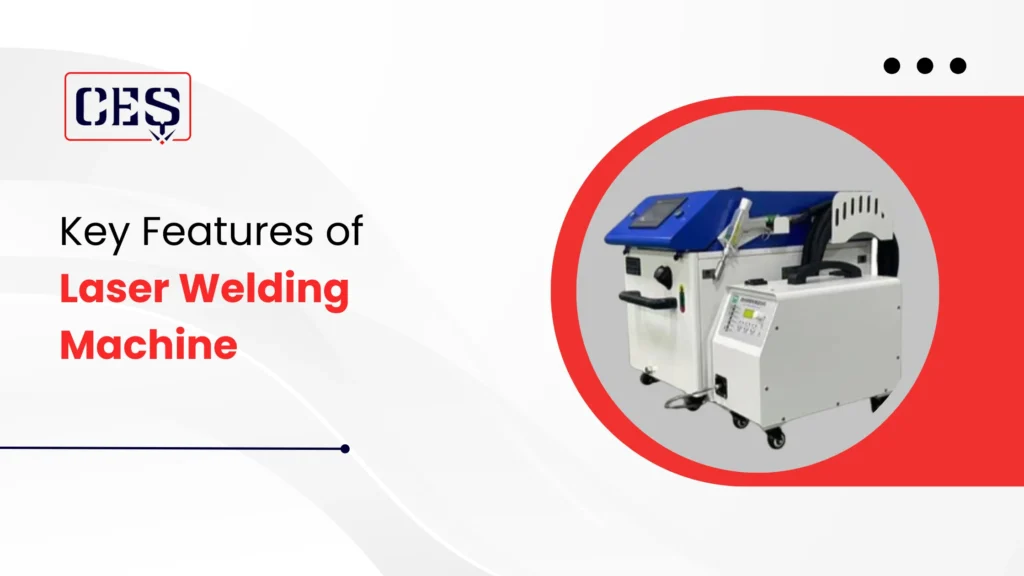
What are The Key Features of Laser Welding Machines?

Laser welding technology has significantly changed the modern world, mainly in the sense that it has changed the way things are manufactured. Traditional welding techniques sometimes seem to be outmatched by the advanced and unbeatable features offered by laser welding technology. Industries in the world are demanding better welding technology to ensure quality production, and as a result, trusted laser welding machine suppliers have emerged. Knowledge of the major aspects of a laser welding machine proves to be beneficial for running a successful business. High Precision and Accuracy One of the most important features of a laser welding machine is its exceptional precision. Focused Laser Beam Technology Laser welding uses a highly concentrated beam of light to create a small and controlled heat-affected zone. This ensures: Minimal distortion Clean and narrow weld seams Reduced post-processing requirements Such accuracy is especially valuable in industries that require micro-welding or intricate component assembly. Ideal for Delicate Materials Laser welding machines can join thin sheets and delicate components without causing damage. This makes them suitable for electronics, jewellery, and medical instrument manufacturing. High-Speed Welding Performance Speed plays an important role in industrial productivity. Modern systems developed by leading laser welding machine manufacturers are designed for rapid operations. Faster Production Cycles A major difference is visible in the comparatively higher speeds of the laser welding process, which is much faster than the conventional methods of TIG or MIG welding. Automation Compatibility Most of the welding lasers can readily be integrated with robotic systems and computer-controlled systems. Strong and Clean Weld Quality Weld quality directly impacts product durability and safety. Deep Penetration Welding Laser beams provide deep penetration with less heat input. This results in strong weld joints that can withstand high stress and load conditions. Minimal Spatter and Cleanup Unlike conventional welding techniques, laser welding produces very little spatter. The clean finish reduces the need for grinding or polishing, saving time and labor costs. Looking to Upgrade Your Welding Efficiency? If you want advanced technology, improved precision, and reliable performance, it’s time to explore solutions from CES Laser Machine Private Limited. Their advanced systems are designed to meet many industrial requirements while ensuring productivity. Click here Energy Efficiency and Cost Savings Energy consumption is a major concern for manufacturing facilities. Lower Heat Input Laser welding machines have a controlled output, hence less waste heat, which is efficient. This prevents damage to materials, further resulting in reduced power consumption. Less Material Waste The precision with which they work ensures that there is minimal wastage, thus saving money. User-Friendly Operation and Safety Features Modern laser welding systems are designed with operator convenience in mind. User-Friendly Interface It permits operators, through digital control panels and touchscreen displays, to easily vary parameters like power, speed, and pulse settings. Advanced Safety Features Safety at work was ensured by built-in safety features such as protective enclosures, emergency stop systems, and automatic shutdown functions. Versatility Across Industries Laser welding machines are highly adaptable and suitable for various materials, including stainless steel, aluminium, carbon steel, and alloys. Wide Industrial Applications From automotive body parts and aerospace components to battery manufacturing and kitchen equipment, laser welding machines serve multiple sectors with consistent performance. Conclusion The demand for advanced welding technology is still on the rise as industries plan ways to improve laser welding productivity and quality standards. The outstanding features associated with these machines, such as precision, speed, penetration, energy saving, and automation, make these systems an ideal investment for any industry. By making an intelligent choice with CES Laser Machine Private Limited, enterprises can improve operational efficiency and be able to cope with today’s rapidly changing industries.

What are The Key Features of Laser Welding Machines? Read More »

What are the Applications of Laser Cutting Machines?

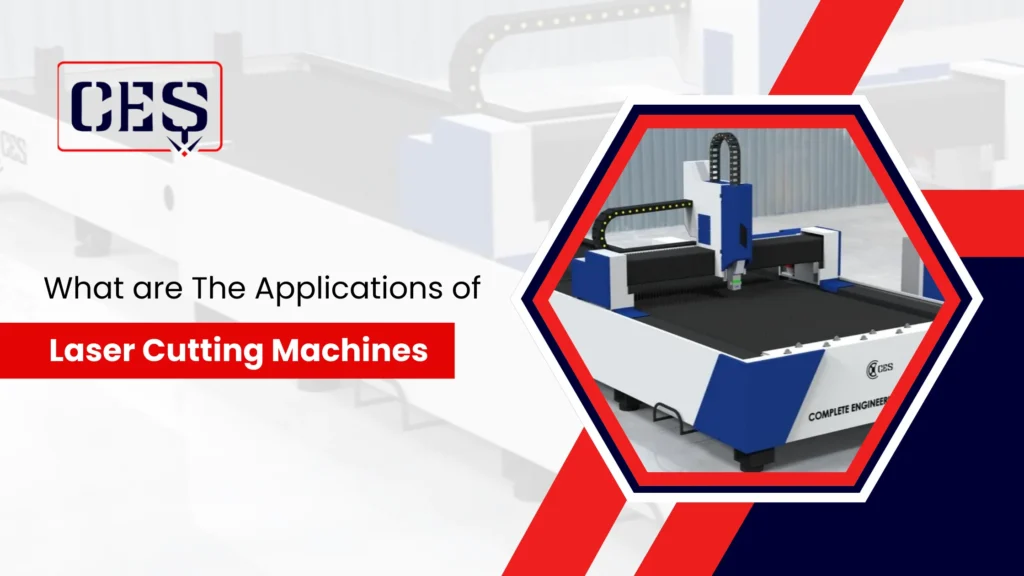
What are the Applications of Laser Cutting Machines?

The laser cutting machine has revolutionized the manufacturing industry by providing unparallelled precision, speed, and flexibility. Whether it is large-scale industrial cutting or complex decorative cutting, the laser has emerged as a key tool for many industries. With the evolution of Industrial Laser Cutting, particularly in fiber lasers, manufacturers are now able to produce cleaner cuts, less waste, and greater productivity than conventional cutting processes. Understanding Laser Cutting Technology A Laser Cutting Machine uses a high-powered laser beam for cutting, engraving, or shaping materials with absolute precision. The laser melts and burns the material, and a gas jet removes the excess material, thus producing smooth edges. The most in-demand type available in the market today is the Fiber Laser Cutting Machine, which is known for its efficiency and ability to cut reflective metals like aluminum, brass, and copper. Applications of Laser Cutting Machines Across Industries 1. Metal Fabrication and Engineering Metal fabrication is one of the most common applications of laser cutting machines. The industry relies on Industrial Laser Cutting for manufacturing parts like brackets, frames, enclosures, and structural components. The process is known for its high accuracy, which makes it suitable for mass production as well as custom manufacturing. 2. Automotive and Transportation Industry Laser cutting machines are essential in the automotive industry for manufacturing parts like chassis parts, exhaust systems, panels, and precision brackets. The speed and repeatability of a Fiber Laser Cutting Machine enable the automotive industry to maintain a high level of quality as well as production. 3. Electrical and Electronics Manufacturing In the electronics industry, laser cutting is employed in the manufacture of control panels, electrical cabinets, and complex metal components. The non-contact process of laser cutting eliminates material distortion, which is important when dealing with thin materials. Searching for advanced laser cutting technology customised to your manufacturing requirements? CES Laser Machine Private Limited provides high-performance laser technology for precision, reliability, and industrial productivity. Find the best solution to enhance your manufacturing capabilities today. Click here 4. Architecture, Signage, and Interior Design Laser cutting machines are used extensively in architectural metalwork, decorative panels, railings, and signage. Designers opt for laser cutting because of its ability to cut complex patterns and details, which are not possible with traditional cutting tools. This sector is in high demand for customized designs. 5. Sheet Metal and Job Work Services Job work sectors have benefited immensely from the use of laser cutting machines because of their short turnaround times and material wastage. In manufacturing centers such as Ahmedabad, there has been an increased demand for Ces Laser Cutting machines. 6. Industrial Equipment and Machinery Manufacturing Laser cutting is globally used in the manufacturing of parts for industrial machinery such as gears, machine bodies, and mounting plates. The accuracy and consistency of laser-cut parts enhance the performance of the machinery. Why Fiber Laser Cutting Machines Are Preferred A Fiber Laser Cutting Machine is preferred because of its low maintenance, high speed, and high-performance capabilities when it comes to cutting metal sheets. When compared to the traditional CO₂ laser cutting machine, the fiber laser machine consumes less power and has a longer lifespan. Conclusion Laser cutting machines have become an essential tool in many industries, providing accuracy, productivity, and flexibility in design. Whether for industrial or artistic purposes, the technology of laser cutting continues to influence the future of manufacturing. With advanced solutions and performance, CES Laser Machine Private Limited is a major contributor to the support of industries with modern laser cutting machines designed for today’s manufacturing requirements.

What are the Applications of Laser Cutting Machines? Read More »

CES Laser Machine at ENGIMACH 2025 Our Experience

CES Laser Machine at ENGIMACH 2025 Our Experience

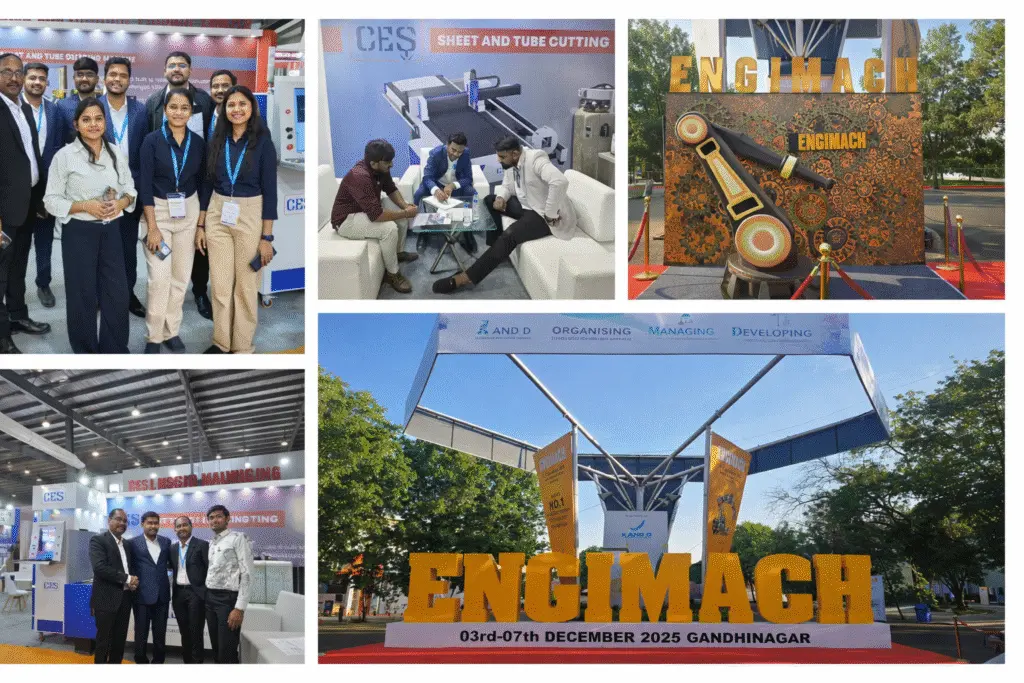
We are delighted to share our wonderful experience of participating in ENGIMACH 2025, one of India’s most prestigious engineering and manufacturing exhibitions. The event was held from 3rd to 7th December 2025 at the Helipad Exhibition Centre, Sector 17, Gandhinagar, and it proved to be an excellent platform for connecting with industry professionals, manufacturers, and technology enthusiasts from across the country. We proudly exhibited under the stall name CES Laser Machine at Booth No. P:17, Hall No. 9. Throughout the exhibition, our booth received an overwhelming response from visitors who were keen to explore advanced laser solutions for their production needs. The footfall, engagement, and level of technical discussion truly exceeded our expectations. At ENGIMACH 2025, we introduced our high-performance Laser Cutting Machines, including: Sheet and Tube Laser Cutting Machine Fiber Laser Cutting Machine Laser Marking Machine Our Sheet and Tube Laser Cutting Machine was one of the major highlights of our display. Visitors showed strong interest in its ability to cut both flat sheets and round or square tubes with high precision, speed, and minimal material wastage. Many manufacturing professionals appreciated the machine’s versatility, automation capabilities, and suitability for industries such as automotive, fabrication, furniture, and infrastructure. The Fiber Laser Cutting Machine also attracted significant attention for its superior cutting quality, low operating cost, and energy efficiency. Live demonstrations allowed visitors to witness clean edges, consistent performance, and high-speed cutting on different materials, which generated great excitement and trust in our technology. In addition, our Laser Marking Machine drew interest from businesses looking for permanent, high-contrast marking solutions for branding, traceability, and product identification. Visitors were particularly impressed by its ability to mark on metals and non-metals with speed, clarity, and long-term durability. What truly made ENGIMACH 2025 special for us was the quality of interactions we had with visitors. Our team had meaningful and productive discussions with manufacturers, plant owners, engineers, and decision-makers who took a genuine interest in our laser cutting machines and marking solutions. We were able to understand their specific requirements, discuss technical details, and explore potential collaborations. The feedback we received was extremely positive and motivating. Overall, our participation at ENGIMACH 2025 was a great success. We are grateful to everyone who visited our booth and showed interest in CES Laser Machine. The encouragement, inquiries, and business opportunities we received have strengthened our commitment to delivering advanced, reliable, and cost-effective laser solutions to the industry. We look forward to building long-term relationships with our new connections and to participating in many more exhibitions in the future. Thank you for making ENGIMACH 2025 a truly memorable and rewarding experience for us.

CES Laser Machine at ENGIMACH 2025 Our Experience Read More »

How Much Does a Single-Pallet Laser Cutting Machine Really Cost?

How Much Does a Single-Pallet Laser Cutting Machine Really Cost?

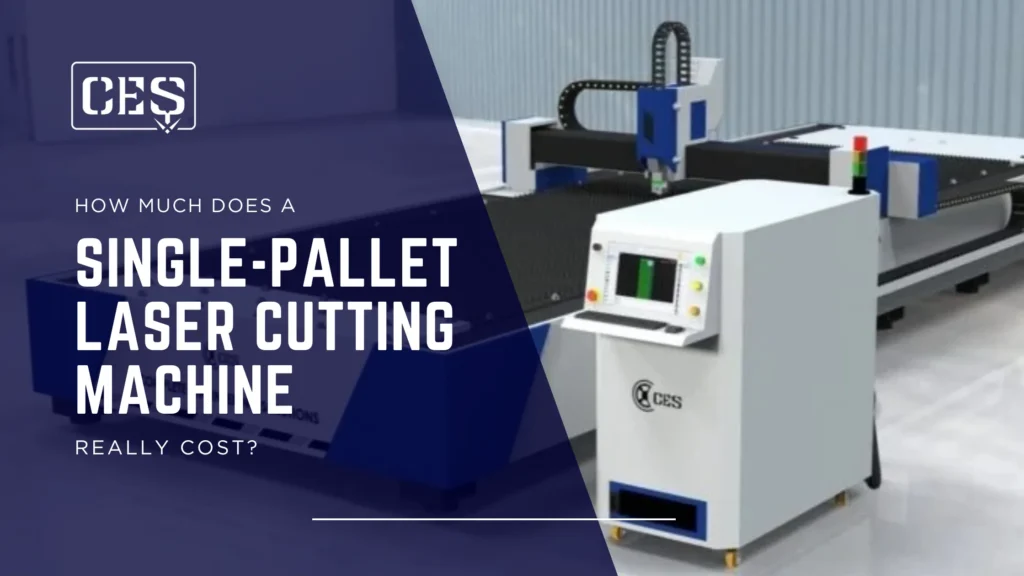
Purchasing a laser cutting machine is a major investment for any fabrication or manufacturing company. Out of various models available in the market, the single pallet laser cutting machine is most commonly used by companies for small to medium-scale production. But the biggest question that lingers in the minds of many prospective buyers is, what is the actual cost of a single pallet laser cutting machine? This is where proficient single-pallet Laser Cutting machine manufacturers help businesses make informed investment decisions. Understanding Single-Pallet Laser Cutting Machines A single pallet laser cutting machine employs one worktable for material loading as well as material unloading. This is unlike the dual pallet systems that enable uninterrupted cutting. However, for the single pallet systems, material loading as well as material unloading takes place during machine downtime. Although there is some effect on productivity, the cost of machines is low. These machines are widely utilized for cutting stainless steel, mild steel, aluminum, and brass metal with great precision. These machines do not generate waste material too, making them more preferable. Their compact design is also beneficial for industries that do not have much space. How Much is the Average Single Pallet Laser Cutting Machine Cost? The cost of an individual pallet-based laser cutting machine could range from ₹15lakhs to ₹60lakhs or even more, depending upon specifications and features. While low-spec models with low power lasers and minimal automation would cost less, more powerful models with sophisticated systems for control and automation could be more expensive. However, it is important to note that it is not advisable to make the sole determining criterion of a purchase the issue of pricing. This is because the total cost of the machine is not only determined by the amount one pays for it initially, but by factors such as installation, training, operations, and maintenance. Key factors that influence the cost of production: Laser power: One of the major factors that contributes to the cost is the power of the laser. A power of 1 kW-3 kW is more economical, with the ability to cut thin to medium-thickness metal sheets. A higher power of 6 kW or more is more expensive, with the advantage of higher speeds and thicker cutting. Machine Build Quality Although rigidity of the machine body, standards of linear guides, and precision of drive systems are critical factors that influence cutting precision and durability of the machine. Reliable companies that manufacture the Single pallet Laser Cutting machine employ high-quality components with SRP that provide durability, resulting in lower maintenance costs in the long term. CNC Controller & Software More advanced CNC systems with better interfaces, nesting software, or real-time monitoring are more beneficial for productivity, but they contribute to the final machine cost. Automation & Accessories Additional features like automatic height control, dust extraction systems, safety enclosures, or chiller units would add to the total cost of purchase. Though optional, these features would add to the efficiency of the machine. On the hunt for an economical, single-pallet laser cutting solution that offers precision and durability? CES Laser Machine Private Limited provides you with customized solutions that meet your production requirements, budgets, as well as plans for expansion in the future. Click here Operating & Maintenance Costs However, it In addition to the acquisition cost, other operative costs include electricity consumed, assist gases, consumables such as lenses and nozzles, as well as maintenance. One of the major strengths of the fiber laser technology is that it is more energy-efficient with reduced maintenance costs as opposed to other CO2 lasers. Provisioning for training and support services is also an added value. This is because good or reliable companies provide adequate installation, operations training, or support services. Is a Single-Pallet Machine the Right Choice for You? Single pallet machines are suited for companies that are more concerned with cost management and space conservation as opposed to processing capability. These machines are suited for prototyping, custom cutting, or small to medium batch production. When procured from reliable Single pallet Laser Cutting machine suppliers, these systems provide an excellent return for their investment.  Conclusion At CES Laser Machine Private Limited, you get more than what you pay for in a single-pallet laser cutting machine. This is possible by understanding your production needs effectively and consulting with seasoned manufacturing companies that help you decide on machines that provide maximum benefits. CES Laser Machine Private Limited is one such company that helps you with effective solutions for your production needs, with their emphasis on engineering, services, and economical solutions for single-pallet laser cutting machines. So get ready for commitments that promise endless possibilities with CES Laser Machine Private Limited.

How Much Does a Single-Pallet Laser Cutting Machine Really Cost? Read More »

How to Maintain Your Laser Cutting Machine for Long-Term Performance

How to Maintain Your Laser Cutting Machine for Long-Term Performance

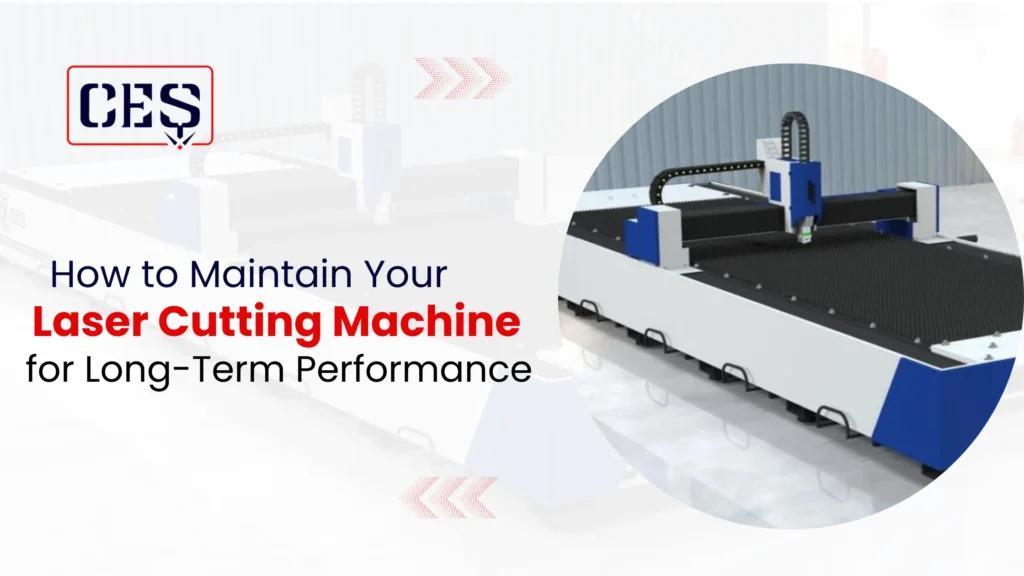
Laser cutting machines have become a very important part for industries dealing with manufacturing, automotive, fabrication, metalworking, signage, among many others. Their accuracy, speed, and flexibility make them the best choice to create quality productions. Like any advanced industrial equipment, however, a laser cutting machine needs proper maintenance to assure long-term performance, accuracy, and operational productivity. The routine maintenance of a machine not only increases its lifespan but also reduces downtime, repair costs, and errors in production. As one of the leading Laser cutting machines manufacturers, we fully understand the importance of maintaining these powerful machines the right way. Below is a complete guide that shall help you in running your laser cutter smoothly for years to come. 1. Regular Cleaning of Optics and Lenses Mirrors, lenses, and protective glass are the main part of a laser cutting machine. During operation, dust, smoke, and metal particles can deposit on them and deteriorate beam quality and the accuracy of cutting. Maintenance Tips Clean lenses and mirrors using recommended cleaning solutions daily. Avoid touching optical components with bare hands. Replace any damaged or scratched lens immediately. Clean optics ensure that the laser beam remains strong, focused, and accurate. 2. Keep the Laser Cutting Bed Free from Debris During the production process, metal slag, dust, and leftover pieces are collected on the cutting bed. If these aren’t cleared, they can block a part of the cutting path and create unevenness in results. Maintenance Tips Clean the cutting table after every shift. Remove small scraps to avoid nozzle collisions. Eliminate dust build-up using an industrial vacuum. A clean working bed helps in maintaining smooth material movement and stable cutting performance. 3. Check Nozzles and Laser Head Adjustment The nozzle controls the airflow and, therefore, the quality of the cut. A clogged or misaligned nozzle can produce burn marks, rough edges, and improper cutting depths. Maintenance Tips Daily, inspect the nozzles for obstruction or deformation. Immediately replace worn-out nozzles. Calibrate the laser head to ensure perfect focus and alignment. Proper nozzle maintenance improves the cutting accuracy and reduces gas consumption. 4. Monitor and Maintain Cooling Systems LCMs heavily rely on an effective cooling system that helps the machines to avoid overheating. Be it a water chiller or an air-cooling unit, maintaining a constant temperature is important from both safety and longevity standpoints for machines. Maintenance Tips Check the coolant levels regularly. Replace coolant every 3–6 months. Clean the chiller filters to maintain proper circulation. Ensure all hoses and connectors do not leak. A stable cooling system protects the laser source and increases production working consistency. Looking for a high-performance and low-maintenance laser cutting machine? At CES Laser Machine Private Limited, we have advanced solutions with expert support and professional services in maintenance. Contact us today to discuss your business needs concerning the best laser cutting system. Click Here 5. Lubricate Mechanical Components Linear guides, bearings, and motion systems depend on proper lubrication for smooth operations. Inadequate lubrication gives rise to high friction, wear, and undesirable vibration. Maintenance Tips Also, lubrication of rails, gears, and bearings is to be performed on a weekly basis. Use only manufacturer-recommended lubricants. Look for any signs of mechanical wear. Lubrication enhances speed, precision, and the general mechanical health of the machine. 6. Keep Software and Firmware Updated Advanced software for cutting path, accuracy, and machine control is the basis for modern laser cutting machines. High-quality  firmware ensures improved performance and enables the use of new features. Maintenance Tips Install software updates given by the manufacturer. Back up machine parameters before updating. Keep your operating system virus-free and optimized. The updated software reduces errors and improves operational stability. 7. Schedule Maintenance While daily and weekly maintenance is important, professional servicing ensures deep inspection and accurate adjustments. Recommended Tasks Annual machine calibration Laser power output testing Structural inspection Servo and motor tuning A trusted service team ensures your machine works at peak efficiency for years. Conclusion Maintaining the laser cutting machine is the key to achieving consistency in accuracy, high productivity, and longer lifespan. Cleaning optics to update software and scheduling expert servicing are necessary for continuous best performance. Being one of the leading Laser cutting machine manufacturers, CES Laser Machine Private Limited understands the importance of reduced maintenance that would help businesses protect their investments and assure long-term operational success.

How to Maintain Your Laser Cutting Machine for Long-Term Performance Read More »

How to Keep Your Laser Welding Machine Running Efficiently for Longer?

Precision, productivity, and performance mean everything in today’s fast-moving manufacturing world. Among the highly advanced tools that industries trust on for smooth, high-quality welds is the laser welding machine. However, like any other sophisticated equipment, it takes proper care and maintenance to keep up with consistent performance over the years. As one of the trusted laser welding machine manufacturers,we believe that extending your machine’s lifespan is not just about maintenance, it’s about understanding how your system works and how to maintain peak efficiency. This blog will delve into how you can ensure the lifetime of your laser-welding equipment remains long and productive, the factors affecting the life expectancy of a laser welder, and some practical maintenance tips to maximize durability. 1. Routine Maintenance-Understanding its Importance Every laser welding machine is a blend of mechanical precision and optical power. Regular maintenance helps identify small issues before they become major failures. Inspect optics: Keep the laser lens and mirrors clean. Dust, oil, or debris can affect beam quality and cause overheating. Check cooling systems: The cooling unit should work perfectly to avoid damage to the laser source. Alignment monitoring: Regular calibration ensures the laser beam is aligned correctly for continued, consistent performance in welding. By setting a monthly inspection schedule, unplanned downtime will be reduced and the life of the laser welding machine significantly improved. 2. Maintain a Stable Operating Environment Operating conditions are indeed essential in determining the lifespan of laser welding equipment. Machines perform at their best under stable conditions where temperature, humidity, and cleanliness are controlled. Avoid dust accumulation, since dust could clog filters, affect ventilation, and damage optical components. Keep temperatures moderate: Excessive heat can shorten the life of electronics and laser components. Proper grounding will prevent power fluctuations or static charges from damaging sensitive laser electronics. Safety and machine longevity alike are enhanced by keeping the workspace organized, dry, and well-ventilated. Ready to optimize your laser welding performance? Contact CES Laser Machine Pvt. Ltd. today for professional service or expert advice on how to enhance the  productivity and life of your machine. Click Here 3. Use High-Quality Consumables and Spare Parts Cheap or non-genuine parts may save money for a while but can drastically shorten your machine’s life. You should use the components recommended by laser welding machine manufacturers. Replace worn-out nozzles, lenses, and filters on time. Avoid third-party or low-grade laser sources and optics. Use compatible shielding gas and filler materials. The original parts will ensure accuracy, reduce the frequency of maintenance, and maintain welding consistency. 4. Train Operators Properly The human factor is one of the most important factors affecting laser welder life expectancy, though it has often been underestimated. Improper use can result in overheating and misalignment, or even serious damage to the laser source. Ensure every operator is trained in start-up and shutdown procedures. Train personnel on early warning signs: unusual noises, spark patterns, or software alerts. Maintain a logbook on maintenance and errors for tracking purposes. Proper training reduces accidental damage and extends the operational life of your laser welding system. 5. Keep the Software and Firmware Updated Laser welding machines often come with intelligent control software for beam power, speed, and pattern settings. Regular software updates from the manufacturer improve efficiency and safety. Always install updates from genuine laser welding machine manufacturers. Back up all operational data before upgrading. Perform test welds after updates to confirm that calibration is accurate. Software maintenance makes sure your machine is compatible with the latest safety standards and operational features. 6. Schedule Professional Servicing Even with proper daily maintenance, professional service should be done periodically. Team up with a certified technician or with the official laser welding machine service team to conduct deep inspections. A typical annual service would include: Cleaning and realigning optical paths. Checking the coolant level and flow rates Replacing filters, seals, and lubrication. Checking internal wiring and laser power sources. It can help in early fault detection and ensure your laser welding machine works at an optimum level for years with regular professional servicing. 7. Avoid Overworking the Machine Continuous running of the machine, without adequate resting or cooling cycles, tends to reduce its life. Follow recommended duty cycles for the operating duration from the manufacturer. Allow rest periods during heavy production runs. Monitor temperatures of the machine and do not exceed rated limits. Perform load balancing and prevent overheating through automation capabilities. Overloading can speed up internal component wear, decreasing the durability of laser welding equipment and increasing service costs. Conclusion A laser welding machine is a long-term investment, which provides precision, efficiency, and productivity-but only if it is treated with care. By taking into consideration these best practices-routine maintenance, stable operation, proper training, timely professional servicing-you can extend the machine’s lifespan and reduce downtime. Being one of the leading laser welding machine manufacturers, CES Laser Machine Private Limited is committed to helping industries get the most out of their machines. From installation and training up to laser welding machine service and maintenance support, CES ensures your laser welding system stays efficient, reliable, and productive for years.

How to Keep Your Laser Welding Machine Running Efficiently for Longer? Read More »

What is the Use of an Industrial Laser Cleaning Machine?

Cleanliness and accuracy are important in today’s industrial setting to guarantee the quality of the products, efficiency of equipment, and safety of the workplace. Conventional cleaning procedures, including chemical baths, abrasion blasting, or mechanical scrubbing, typically entail high expenditures, extended downtime, and environmental issues. That is where an industrial laser cleaning machine enters the picture, a groundbreaking innovation that provides quick, accurate, and environmentally friendly cleaning options. An industrial laser cleaner utilizes a high-powered laser beam to eliminate impurities, rust, paint, oxides, and other undesirable elements from metal, plastic, or composite surfaces. The laser removes the target material without causing any damage to the base substrate, allowing accurate cleaning even in sensitive applications. Most Important Applications of Industrial Laser Cleaning Machines Rust and Oxide Removal Industrial metals tend to corrode and oxidize, which may impact product function and appearance. Rust and oxides are quickly removed using laser cleaning, which prepares surfaces for additional processing, including welding, painting, or coating. Paint and Coating Removal Paint stripping or coating removal using traditional methods tends to be cumbersome and uses dangerous chemicals. A targeted removal of paint using an industrial laser cleaning machine is achieved without solvents, reducing waste and environmental risk. Mold and Tool Cleaning Residues that impair product quality are deposited on molds and accurate tools in manufacturing. Laser cleaning is quick to restore the surface to its original state without mechanical wear, prolonging the life of costly equipment. Surface Preparation Laser cleaning leaves a clean, roughened surface perfectly best for follow-up coating, bonding, or welding processes. Adhesion and durability are improved. Accurate Cleaning in Sensitive Industries Aerospace, automotive, electronics, and medical sectors consistently need micro-level cleaning. The non-contact technique of laser cleaning avoids damaging the substrate but attains high accuracy and reproducibility. Ready to transform your industrial cleaning process? Discover CES Laser Machine Private Limited for complete laser cleaning technology today. Click here Benefits of Utilizing an Industrial Laser Cleaning Machine The benefits of laser cleaning machine are non-contact, chemical-free, and highly effective for restoring metal surfaces in industrial applications. Eco-Friendly and Safe: Avoids using chemical cleaners and abrasives, reducing pollution and exposure to operators. High Accuracy: Affects only the undesired material, with no damage to the base surface. Less Downtime: Quick cleaning processes save manufacturing time when compared to traditional techniques. Low Operating Costs: Less operating costs with low consumables and less labor. Multifarious Applications: Successful on metals, plastics, composites, and delicate parts. Choosing the Right Laser Cleaning Supplier Choosing a trusted laser cleaning machine manufacturer is fundamental to guaranteeing the effectiveness and durability of your equipment. Leading laser cleaning machine suppliers don’t just offer high-quality industrial laser systems but also training, maintenance, and technical assistance. CES Laser Machine Private Limited is a leading supplier of industrial laser cleaning machines designed to meet different industrial requirements. Their technology integrates accuracy, efficiency, and safety, enabling businesses to enjoy high levels of cleanliness and operational productivity. Final Thoughts Industrial laser cleaning machines are revolutionizing the approach to cleaning and surface preparation in industries. Being accurate, green, and efficient, it eliminates conventional methods while improving productivity and product quality. To businesses that want to upgrade their cleaning operations, collaboration with veteran laser cleaning machine manufacturers such as CES Laser Machine Private Limited provides access to dependable, high-performance solutions with industrial capacities.

What is the Use of an Industrial Laser Cleaning Machine? Read More »

How to Choose the Right Laser Cutting Machine for Stainless Steel Fabrication

How to Choose the Right Laser Cutting Machine for Stainless Steel Fabrication

In the metal fabrication industry, stainless steel is renowned for its strength, corrosion resistance, and versatility. It’s used in building and autos, kitchen utensils, and industrial machinery, to name a few. Yet to work with this resilient material necessitates accuracy, efficiency, and advanced technology. This is where laser cutting machines are involved. Being a reliable laser cutting machine producer, CES Laser Machine Private Limited provides complete solutions that aid companies in achieving high accuracy and productivity in stainless steel processing. Why Stainless Steel Needs the Proper Machine Stainless steel is denser and harder than most other metals. Cutting using traditional tools results in rough edges, warping, or a lot of wastage of material. This is where the benefit of laser cutting machine comes into play. A high-quality laser cutting machine guarantees: Burr-free smooth edges Low heat-affected zones High repeatability and accuracy in cutting using fiber lasers Less wastage of material Upon comparison of laser cutting with conventional cutting, it is obvious that lasers provide better results, particularly for stainless steel. The limitations of conventional cutting machines are slower speed, lower precision, and increased wear and tear. However, the newer laser cutting technology provides tidy cuts, greater efficiency, and versatility in multiple applications. Things to Keep in Mind While Selecting a Laser Cutting Machine Power Capacity The wattage of a laser machine specifies the accuracy with which it will cut stainless steel. Thin sheets are cut using a low power (1–2 kW), whereas thicker plates need higher power levels (4–10 kW or higher). It guarantees speed as well as accuracy without blowing your budget by matching the power to your task. Cutting Speed & Productivity  Production environments require quick turnaround times. An optimized speed setting laser machine with high cutting efficiency reduces downtime and maximizes throughput. High-end machines also include automatic adjustments to optimize speed and quality. This represents the cost efficiency of fiber laser machines that produce more output per unit of energy spent. Accuracy Applications like medical devices, aerospace, and electronics need micron-level accuracy. A dependable laser cutting system provides consistent beam quality and sophisticated motion control for repeatable outcomes. This establishes lasers as the superior cutting technique for metal manufacturing compared to antiquated methods. Software & Automation Features With intelligent software, contemporary laser theoretical machines enable designers to upload designs, modify cutting parameters, and track performance. Options such as nesting software increased material use, eliminating wastage and cost. Such applications of fiber laser cutting in industries exemplify how automation and intelligent programming can improve productivity and sustainability. Flexibility in Applications If your company deals with more than one metal, select a machine that not only cuts stainless steel but also aluminum, carbon steel, copper, and alloys. This provides more flexibility in operation. Maintenance & Durability Longevity is paramount when it comes to investing in heavy machinery. Opt for machines built with sturdy parts, efficient cooling mechanisms, and few maintenance needs. Having a manufacturer with after-sales assistance and spare parts guarantees long-term dependability. Safety Standards Laser cutting is a process that has high beams and heat. Proper enclosures, sensors, and international safety standards are ensured by a machine that keeps your workforce safe and avoids accidents. Are you confused in choosing among various models or power levels? Get in touch with us today to find out how we can customise solutions for your business. Click Here Why Select the Best Laser Cutting Machine Manufacturer? When it comes to stainless steel fabrication, the choice of machine can significantly impact your productivity and product quality. A reliable laser cutting machine manufacturer will not only deliver advanced equipment but also provide long-term value through innovation, durability, and support. The best solutions in the market offer: High-power fiber laser sources capable of cutting stainless steel across a wide range of thicknesses Sophisticated control software for precision, efficiency, and user-friendliness Energy-saving technology that minimizes overall operating expenses Custom-made options to meet the specific requirements of various industries and scales of production Extensive after-sales service involving operator training, routine maintenance, and availability of spares By opting for a reputable partner, companies can rest assured to invest in a machine that increases efficiency, guarantees accuracy, and provides consistent performance over the years to come. Conclusion Choosing the right laser cutting machine for stainless steel processing can be the difference between efficiency, quality, and profitability. Considerations like power, accuracy, speed, automation, and safety have to be carefully balanced before making the investment. By going with a trusted laser cutting machine manufacturer such as CES Laser Machine Private Limited, you ensure your enterprise receives an advanced solution designed for long-term productivity and expansion. The benefits of fiber laser cutting, in comparison to the restrictions of conventional cutting machinery, are very high. From accuracy cutting using fiber lasers to fiber laser cutting usage in industries, new systems are the most effective cutting technique for metal fabrication, with the flexibility and cost-effectiveness of fiber laser machines.

How to Choose the Right Laser Cutting Machine for Stainless Steel Fabrication Read More »

Advantages of Laser Cutting Machines Over Traditional Cutting Methods

Advantages of Laser Cutting Machines Over Traditional Cutting Methods

In today’s world of high-speed manufacturing, accuracy and productivity are all that matter. Conventional cutting techniques such as mechanical sawing, drilling, or plasma cutting have been prevalent for years, but industries are now moving towards high-tech solutions more and more. One of these technologies is the laser cleaning machine, which not only facilitates accuracy cutting but also boosts the overall efficiency of manufacturing processes. This blog discusses the advantages of laser cutting technology and the reasons why laser cutting machines clearly have a better advantage than conventional cutting techniques. 1. Unparalleled Precision and Accuracy Laser cutting equipment employs intensely concentrated beams of light to sever materials with great accuracy. In contrast to conventional approaches based on physical pressure or blades, lasers may perform sophisticated designs and geometries with smaller margins of error. Laser precision cutting guarantees high accuracy, rendering the technology suitable for applications such as aerospace, automotive, and electronics reliant on precise measurements and perfect finishes. 2. Higher Speed and Efficiency Speed is the greatest advantage of laser cutting machines. Conventional methods involve manual adjustments, tool changes, and longer setup times. Laser machines operate at impressive speeds, particularly for thin to medium-thickness materials. These high-speed laser cutting benefits enhance productivity and lower manufacturing costs while making timely deliveries possible. 3. Cleaner and Smoother Finishes One of the shared demerits of conventional cutting tools is that they tend to leave a coarse finish that needs extra polishing or processing. Laser cutting machines produce clean, smooth edges with minimal burrs and distortions. This eliminates the post-processing effort, thus conserving time and resources while providing better product quality. The obvious distinction between laser cutting quality and conventional tools explains why businesses are making the transition to advanced laser systems. 4. Flexibility of Materials Laser technology is not limited to one material. It can only cut metals such as steel, aluminum, and copper, but also non-metal materials like plastics, ceramics, wood, and composites. The conventional cutting process has to use a different tool per material, but with laser machines, manufacturers have flexibility without the need for constant tool switching. 5. Minimum Material Waste Efficiency is not just a matter of speed but also of resource utilization. Laser cutting machines provide accurate control, meaning less material waste than other traditional cutting methods. Nesting software enables the cutting of parts so that material use is maximized. The green advantage here is the minimized material waste in laser cutting, enabling firms to reduce their expenses while practicing sustainable manufacturing. 6. Non-Contact Process Conventional cutting techniques employ blades, drills, or direct contact, which may result in tool wear and tear and even material deformation. Laser cutting is a contact-free process, as the laser beam does not physically touch the material. This minimizes tool wear, maintenance expenses, and sensitive part damage risk. 7. Automation and Integration Capabilities The latest laser cutting machines can be quite easily coupled with automation and CNC technologies. This is appropriate for mass production where accuracy and consistency are critical. Conventional cutting techniques fall short of providing the same kind of repeatability without heavy manual intervention. 8. Safety and Minimized Human Error Because laser machines are mostly automated and contained, they reduce operator hazards over manual cutting with sharp edges and heavy machinery. Automation also prevents human errors, which means each cut is exactly as per the design specifications. Conclusion Though conventional cutting processes have worked for industries for many years, the benefits of laser cutting technology are obvious. From greater precision and speed to flexibility and efficiency, laser technology is transforming the future of manufacturing. Perhaps more consistently, advances like the laser cleaning machine are expanding boundaries further, giving manufacturers an advantage in terms of quality, productivity, and sustainability. If your company is ready to adopt this innovative laser cutting technology, CES Laser Machine Private Limited is ready to offer world-class laser cutting and cleaning machines according to your requirements.

Advantages of Laser Cutting Machines Over Traditional Cutting Methods Read More »