

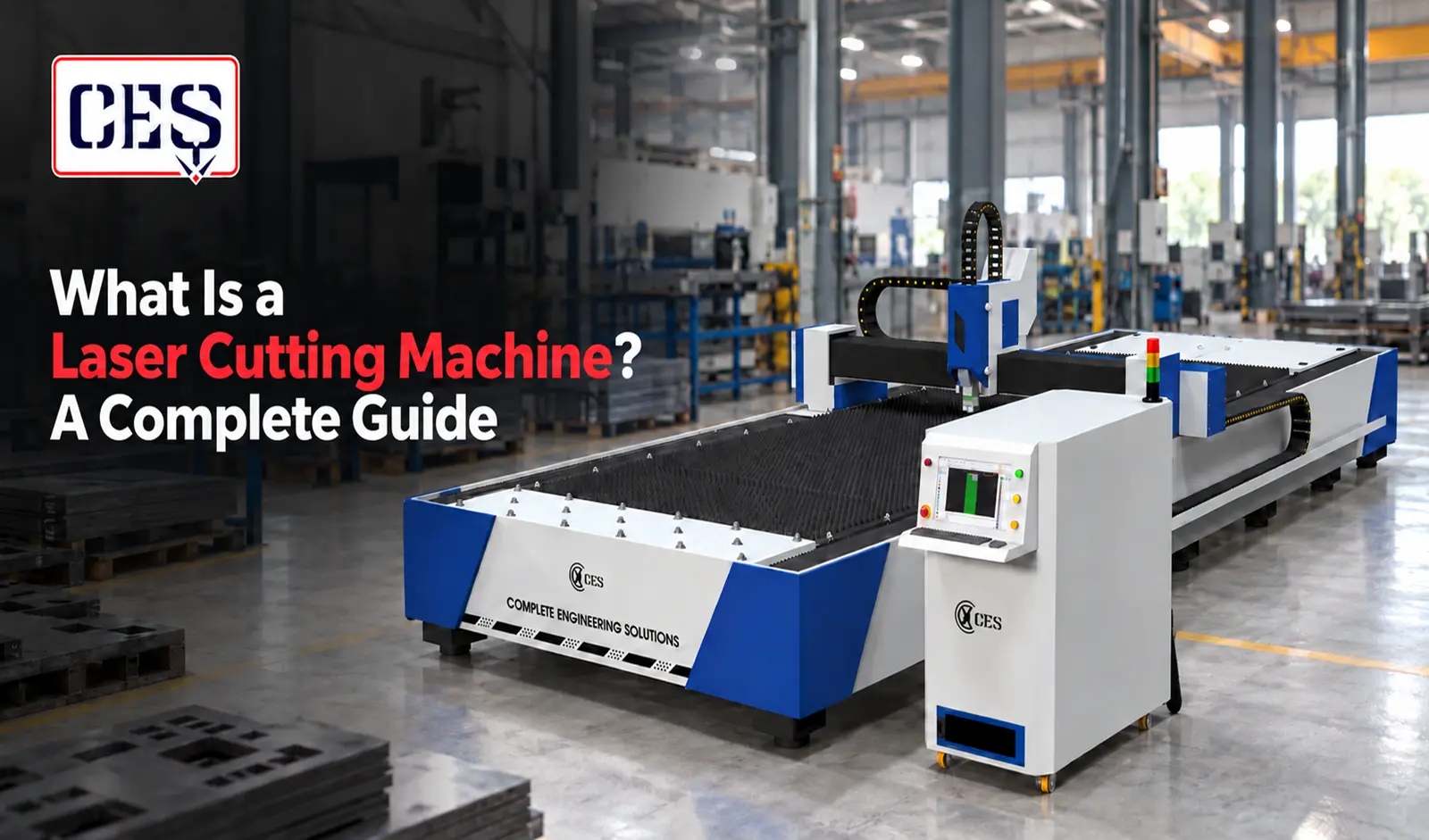
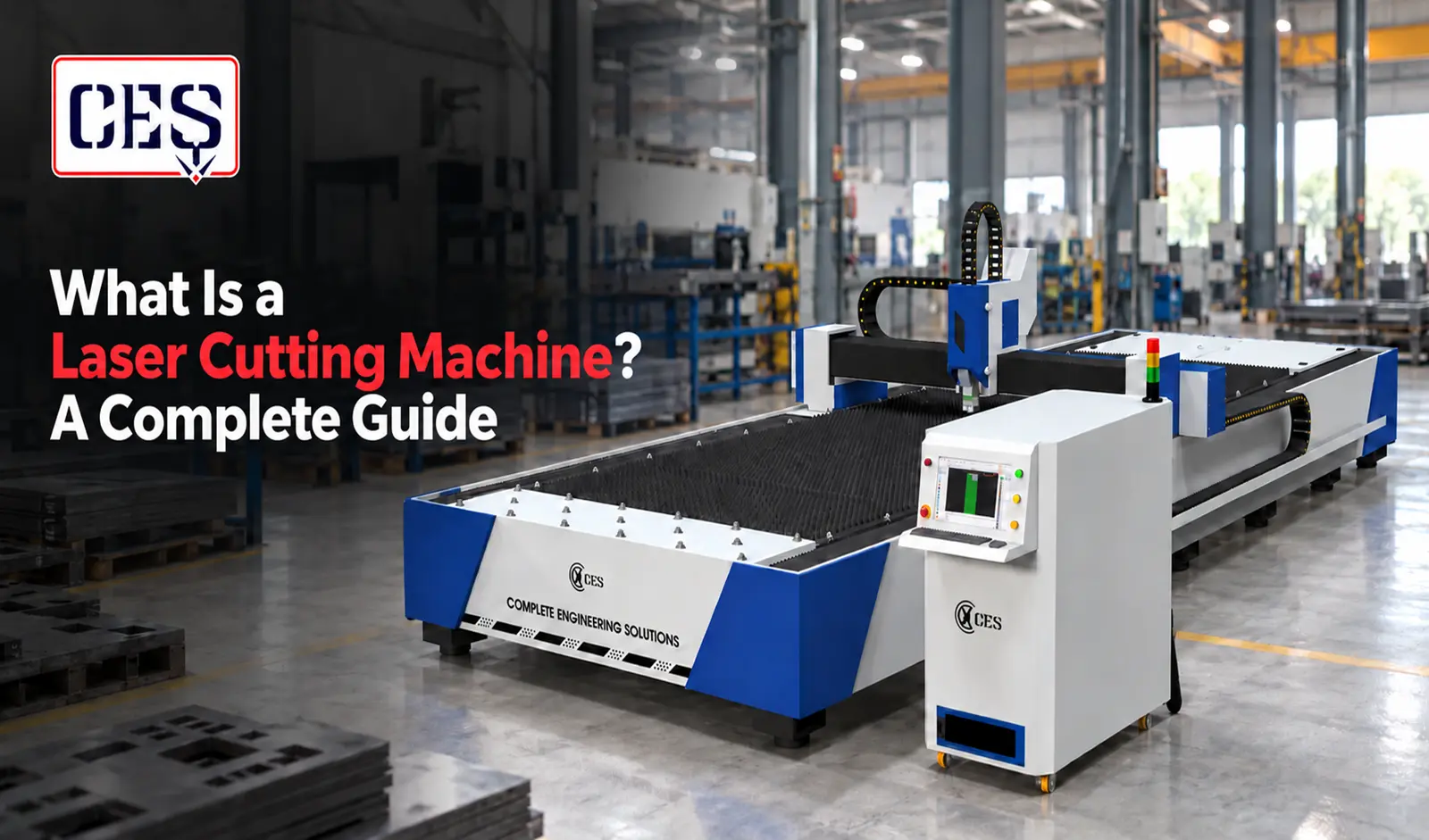
A laser cutting machine is a CNC machine that uses a focused, high-power laser beam to melt, burn or vaporise material along a programmed path, producing clean, precise cuts. Modern machines use a fiber laser to cut mild steel, stainless steel, aluminium and more - with high speed, tight accuracy and low running cost. This guide covers how it works, its uses, price, how to choose one, and how to maintain it.
If you run a fabrication shop or are planning to buy your first machine, understanding the laser cutting machine from the ground up helps you choose the right model and get the most from it. This complete guide walks through what a laser cutting machine is, how it works, what it can do, what it costs, how to pick the right one, and how to keep it running for years. Along the way we link to detailed guides on each topic so you can go deeper wherever you need to.
What Is a Laser Cutting Machine?
A laser cutting machine focuses a laser beam to a fine point on the material surface. The concentrated energy melts or vaporises the metal, while an assist gas blows the molten material out of the cut. The whole process is guided by a CNC controller, so the beam follows the exact profile from your drawing - repeatably, part after part. The result is a narrow cut, clean edges and very little wasted material.
Under the hood, the machine is a system of several parts working together - the laser source, cutting head, motion system, chiller and controller. If you want to understand each of these, our breakdown of the main parts of a laser cutting machine explains what every component does.
Laser cutting machines come in a few common forms. Flat-sheet machines cut plates and sheets and are the most widely used; tube and pipe machines cut hollow sections; and higher-end lines add single- or double-pallet loading to keep the laser cutting while one table is unloaded. Whichever form you choose, the core cutting principle is the same - only the material handling changes.
How Does a Laser Cutting Machine Work?
The process runs in four simple steps:
- Program the part: The CAD/CAM drawing is nested and sent to the CNC controller, which plans the cutting path.
- Focus the beam: The cutting head focuses the laser to a tiny, intense spot on the material surface.
- Cut: The focused energy melts or vaporises the metal along the path.
- Clear the cut: Assist gas (nitrogen, oxygen or air) blows the molten material out of the kerf, leaving a clean edge.
A single machine actually performs several jobs at once - positioning, focusing, cutting and gas control - all coordinated by the controller. We cover these in more depth in our guide to what a laser cutting machine really does.
Fiber Laser Cutting: The Modern Standard
Almost every new metal-cutting machine today uses a fiber laser, because it absorbs into metal far more efficiently than older technology, runs cheaper and needs less maintenance. Our overview of what makes fiber lasers so efficient explains why they have become the default choice.
A CNC fiber laser cutting machine pairs that fiber source with computer control for automated, high-accuracy production. This combination is transforming the industry - you can see how in our article on how fiber laser cutting is reshaping metal fabrication, and where the technology is heading in our look at the latest laser cutting trends and innovations.
Key Advantages of a Laser Cutting Machine
Compared with traditional methods such as shearing, punching or plasma, laser cutting gives you finer detail, cleaner edges and less secondary finishing. Our comparison of laser cutting versus traditional cutting methods sets out the differences in full.
For a workshop, the day-to-day gains are faster jobs, less scrap and more design freedom - the practical wins are covered in the benefits of a laser cutting machine in your workshop. And because these machines cut fast with low running cost, they pay back quickly; we break down the numbers in how fiber lasers improve ROI and efficiency.
What Can a Laser Cutting Machine Do? Applications
Laser cutting machines are used across automotive, sheet-metal fabrication, electrical panels, signage, furniture, HVAC and more. Our guide to the applications of laser cutting machines covers the main industries and use cases.
The most common job is flat sheet-metal cutting. If that is your main work, the sheet-metal laser cutting process and its advantages explains how it works and where it shines.
Materials, Thickness, Power and Assist Gas
How thick and what material you can cut depends on the machine's power and your settings. Our guide to cutting thickness, materials, power and speed shows the relationships you need to get clean cuts.
Two settings matter most: laser power and assist gas. Choosing between machine sizes is covered in our comparison of 1000W, 2000W, 3000W and 6000W fiber lasers, while the trade-offs between nitrogen, oxygen and air are explained in our fiber laser cutting gas guide.
How Much Does a Laser Cutting Machine Cost?
Price depends on power, bed size, brand and automation, so there is no single figure. Our 2026 laser cutting machine price breakdown gives realistic ranges, and for automated loading our article on what a single-pallet machine really costs goes deeper.
Purchase price is only half the story - running cost matters just as much. See our per-hour operating cost breakdown to understand electricity, gas, consumables and maintenance before you buy.
How to Choose the Right Laser Cutting Machine
The right machine depends on your material, thickness, volume and budget. Start with our practical guide on how to choose a machine for your business, then use our tips for selecting the best fiber laser to narrow it down.
It also helps to know the pitfalls - our list of mistakes to avoid when picking a manufacturer saves buyers from costly errors. For stainless work specifically, see choosing the right machine for stainless steel, and if you are comparing brands, our overview of the top laser cutting manufacturers is a good starting point.
Fiber Laser vs Other Cutting Methods
Buyers often weigh laser against other technologies. If you are choosing between laser types, our comparison of fiber laser versus CO2 laser cutting explains why fiber usually wins for metal. And if you are comparing cutting processes altogether, laser versus plasma, waterjet and CNC punching helps you pick the right method for the job.
Maintenance and Keeping Your Machine Efficient
A laser cutting machine rewards regular care with years of reliable service. Our guide on maintaining your machine for long-term performance covers the routine, and our tips for extending a fiber laser's life go further on optics, chiller and consumables.
If cut quality drops, most issues have simple fixes - see common sheet-metal cutting problems and how to fix them. And to keep output high once you are running smoothly, our article on maximising efficiency in industrial laser cutting shares practical ways to cut cycle time and cost.
Frequently Asked Questions
1. Is a laser cutting machine safe to operate?
Yes, when used correctly. Modern machines are fully enclosed with safety interlocks and require basic PPE and fume extraction. The main risks - the beam, fumes and electrical parts - are well controlled by the machine's guarding and by trained operation.
2. How much floor space and power supply does a laser cutting machine need?
It depends on the bed size and power. Plan for the machine footprint plus room for sheet loading, a suitable three-phase power supply, an assist-gas supply and fume extraction. Your supplier will give the exact electrical and space specification for your chosen model.
3. Do you need a skilled operator to run a laser cutting machine?
Modern CNC machines are largely automated, but an operator still needs training in the nesting software, material setup, safe operation and basic maintenance to get consistent, high-quality results. Most suppliers provide this training with the machine.
4. How long does a laser cutting machine last?
A well-built machine that is correctly sized and maintained can run reliably for many years. Fiber laser sources in particular have a long service life, and keeping the optics clean and the chiller serviced is what protects that lifespan.